Field Story
MEETING
GRIZZLY
A Brooks Range Hunt, a Hard Question, and a Christensen Arms Ridgeline
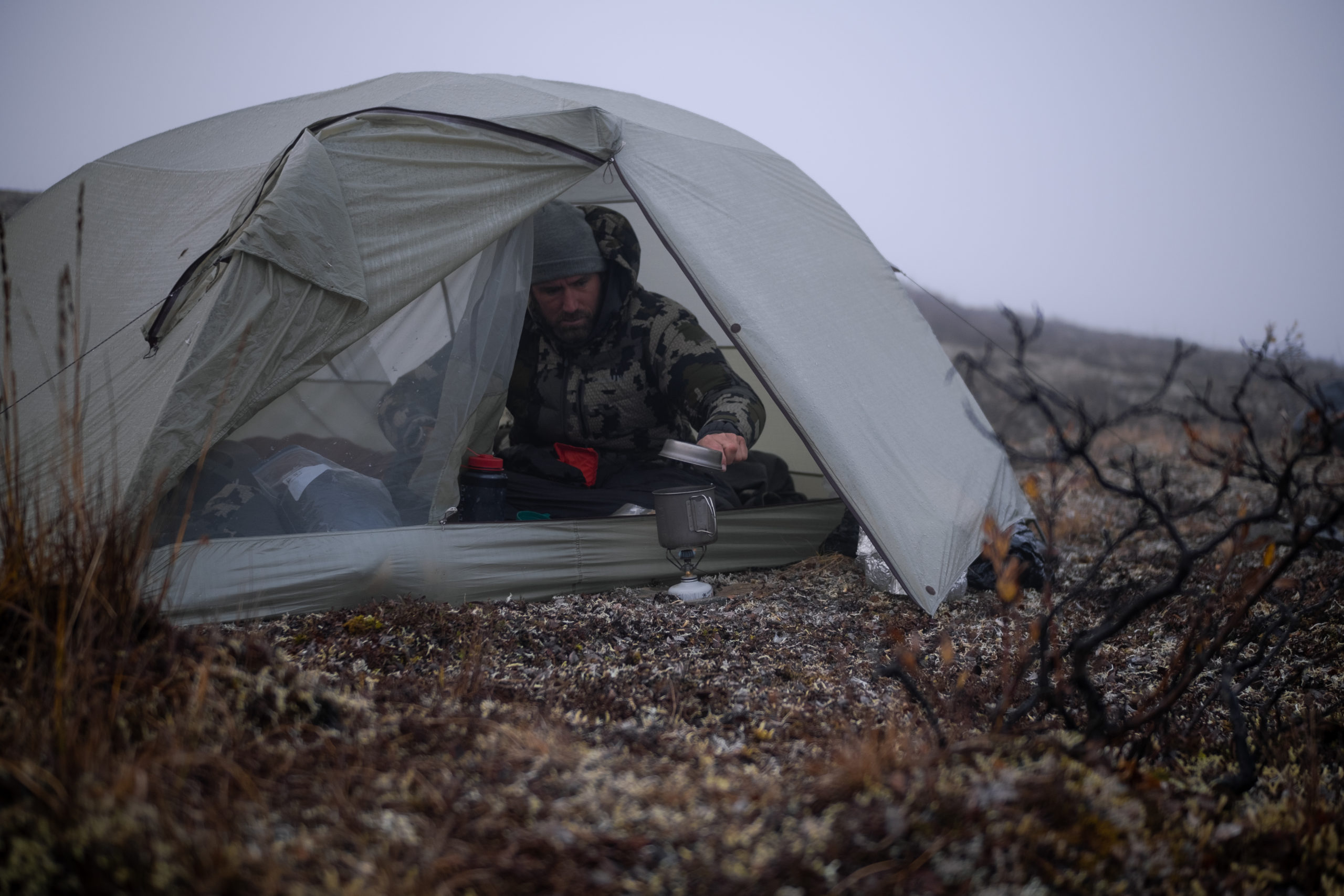
Grizzly bear hunting forces questions that are bigger than the shot itself. Could I ever shoot a grizzly bear? For an avid hunter, outdoorsman, and conservationist, the answer once felt clear: probably not. Then came a remote Brooks Range hunt in Northern Alaska, a grizzly tag in a pocket, and a close encounter that changed the way the question felt.
This is a Christensen Arms field story about wilderness, responsibility, conservation, and the kind of rifle confidence that matters when the terrain is unforgiving and the moment arrives fast.
Why a Grizzly Bear Hunt?
Growing up on a Wisconsin farm, hunting was simply part of life: Thanksgiving morning game drives, opening-day whitetails, family, tradition, and meat in the freezer. Over time, that interest shifted toward athletic spot-and-stalk mountain hunts where the work begins long before the rifle comes off the shoulder.
A record-book moose in British Columbia and an archery elk hunt in Utah had already set the tone for harder country. With the freezer empty and another adventure calling, the next question became obvious: what about an exploratory hunt in the Brooks Range of the Arctic National Wildlife Refuge?
The country promised everything a serious hunter looks for and everything a casual hunter avoids: remote access, limited pressure, huge country, heavy packs, unpredictable weather, and long days behind glass. Moose and caribou tags were easy decisions. The grizzly tag was different.
The tag was purchased, but the question remained: if the opportunity came, would taking a grizzly feel right?
Into the Brooks Range
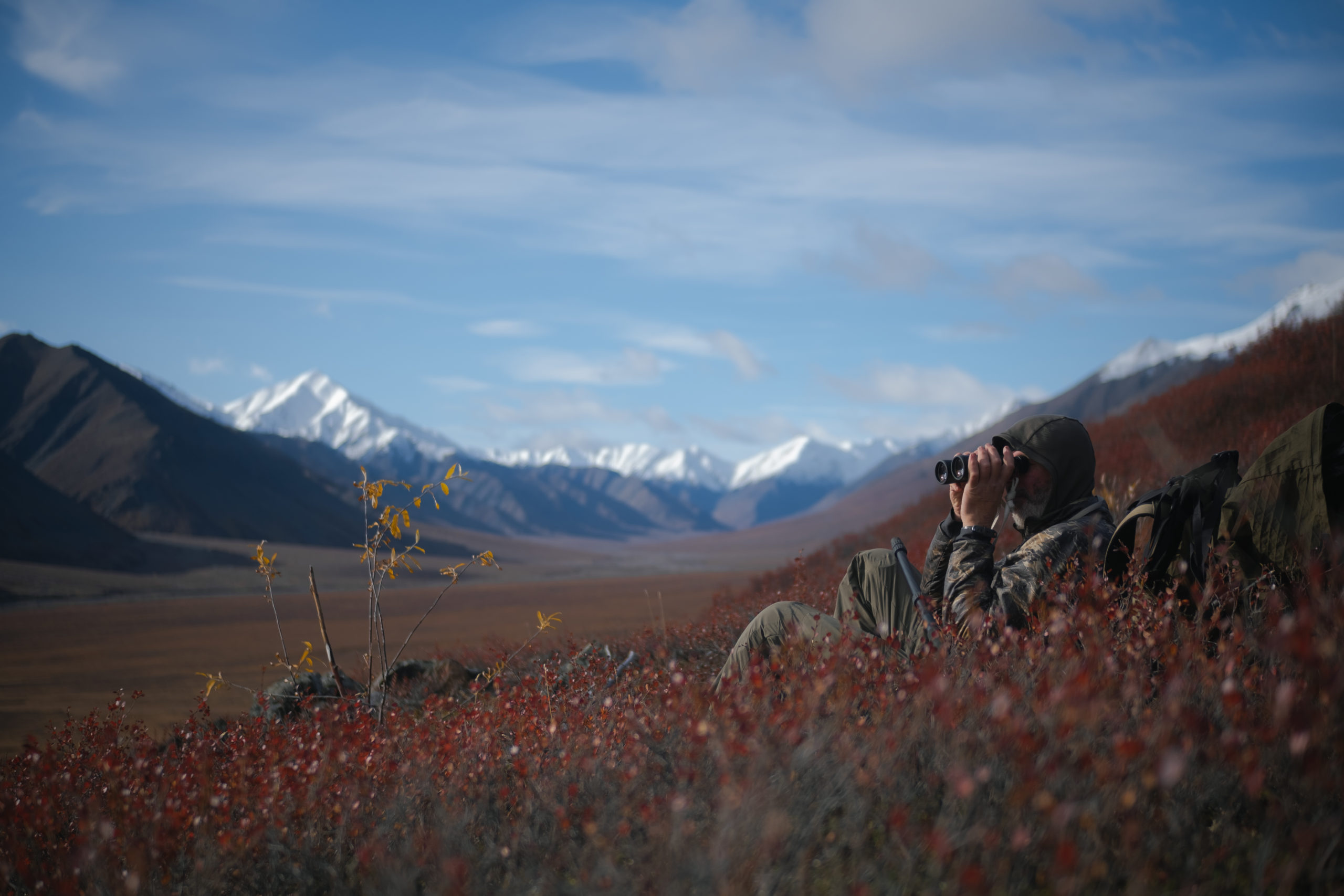
The hunt began in Fairbanks with a flight in a small Helio airplane, following the Alaska Pipeline before turning toward the Chandalar River Basin. Rolling green hills gave way to foothills, then to mountains. Rivers cut through willows and spruce. Moose and black bear appeared below before the plane circled into camp.
At base camp, two small yellow tents and one larger green tent waited beside a river basin. A white electric fence around the green tent was an immediate reminder: this was grizzly country. The other tents sat outside the protected perimeter.
The guide, Fred Harbison, fit the country. Tall, lean, quick with a smile, and harder to keep up with than he first let on, Fred had the kind of resume that makes remote wilderness feel slightly more manageable: biology, Outward Bound, paramedic work, firefighting, and a fondness for parachuting into sheep hunts and hiking out.
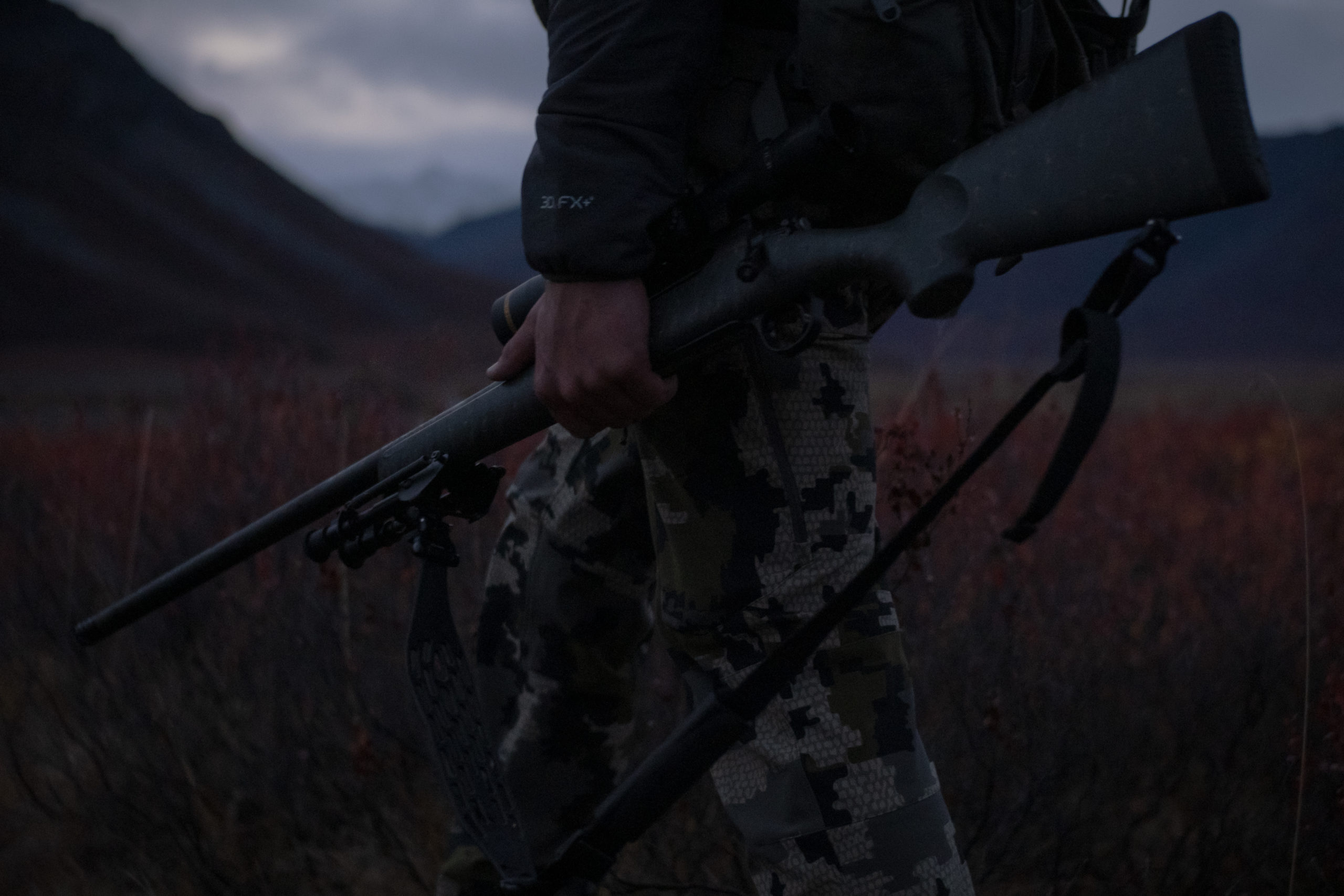
From the first miles, the country made its ownership clear. Footprints, scat, and spruce trees rubbed with grizzly hair lined the trail. Fred carried his rifle in hand. It did not take long to decide to do the same.
The Hard Question Behind Grizzly Bear Hunting
For many hunters, grizzly bear hunting carries a different emotional weight than filling a freezer with venison, moose, elk, or caribou. The author wrestled with that honestly. Grizzly meat can be eaten when handled and cooked properly, but bears are apex predators, symbols of wild country, and animals that inspire strong feelings on every side of the hunting conversation.
That tension became the center of the hunt. On one side was respect for the animal. On the other was the role regulated hunting can play in predator management, habitat funding, population data, and long-term conservation. In Alaska, hunters must understand the current regulations, tag requirements, salvage rules, and unit-specific restrictions before any hunt begins. Always review the current Alaska Department of Fish and Game hunting regulations before planning a hunt.
The question was not whether a grizzly tag was legal. It was whether the decision would feel right if the moment arrived.
Lessons From Heavy Packs and Big Country
The first days were measured in miles, soggy tundra, blueberry fields, steep drainages, and constant glassing. Every step sank into the ground. Every ridge carried the possibility of moose, caribou, wolf, sheep, bear, or nothing at all.
At one point the hunters found a family of musk ox far from where they expected them to be. Later, from a hillside above camp, they watched a sow grizzly lead two cubs through a rocky drainage while Dall sheep, wolves, and caribou moved across the surrounding country. The Brooks Range felt less like a destination and more like a living system.
That is the nature of an Alaska backcountry hunt. Plans matter, but the country gets the final vote.
- Carry matters: the rifle has to be light enough to live with under a heavy pack.
- Weather matters: wind, snow, rain, and sun can all show up in the same hunt.
- Shot confidence matters: when the moment comes, gear uncertainty cannot be part of the equation.
- Judgment matters: every decision in bear country carries consequences.
A Close Encounter With a Sow and Cubs
Several days into the hunt, a serious encounter brought the reality of grizzly country into sharp focus. Approaching a deep drainage, the group spotted a large sow with two cubs at close range. The photographer paused for images while the guide moved forward. Nobody wanted to abandon anyone in bear country.
The sow led her cubs uphill toward the guide, then changed direction without knowing another hunter was positioned nearby. At close range, one shout changed everything. Suddenly the sow realized there were people around her from multiple positions. Her hair bristled. She woofed. She spun. The moment tightened.
When she started toward the photographer, Fred fired a round into the dirt in front of her. The impact broke the charge before it became something worse. She froze, turned, and left the drainage with her cubs.
That encounter made the abstract question immediate: this was not a zoo, a documentary, or an idea. It was wild country on its own terms.
The Bear on the Knoll
Then came the whisper: there was a bear. About a half mile away, a large male grizzly stood silhouetted on a grassy knoll. The guide studied him and gave the assessment: he was a mature shooter bear. The wind was right. The group moved carefully.
They dipped in and out of spruce, spotting the bear, losing him, and finding him again as he moved through the timber. The guide described the bear's heavy, mature walk. Eventually the moment came together.
When the words "clear to shoot" came, the shot broke from a .300 Win Mag Christensen Arms Ridgeline. The bear reacted, moved into the spruce, and the silence that follows a shot settled over the valley.
The old boar was mature, healthy, and magnificent. A tooth was later extracted by Alaska Fish and Game, contributing age and population information. The author carried him out the next day under a 90-pound pack, determined to honor the animal fully.
The Rifle Behind the Shot
Remote Alaska does not leave much room for gear that almost works. The rifle named in the story was a Christensen Arms Ridgeline chambered in .300 Win Mag, a platform built around the kind of traits backcountry hunters value: lightweight carry, carbon fiber barrel technology, weather-resistant materials, and precision when the shot finally presents itself.
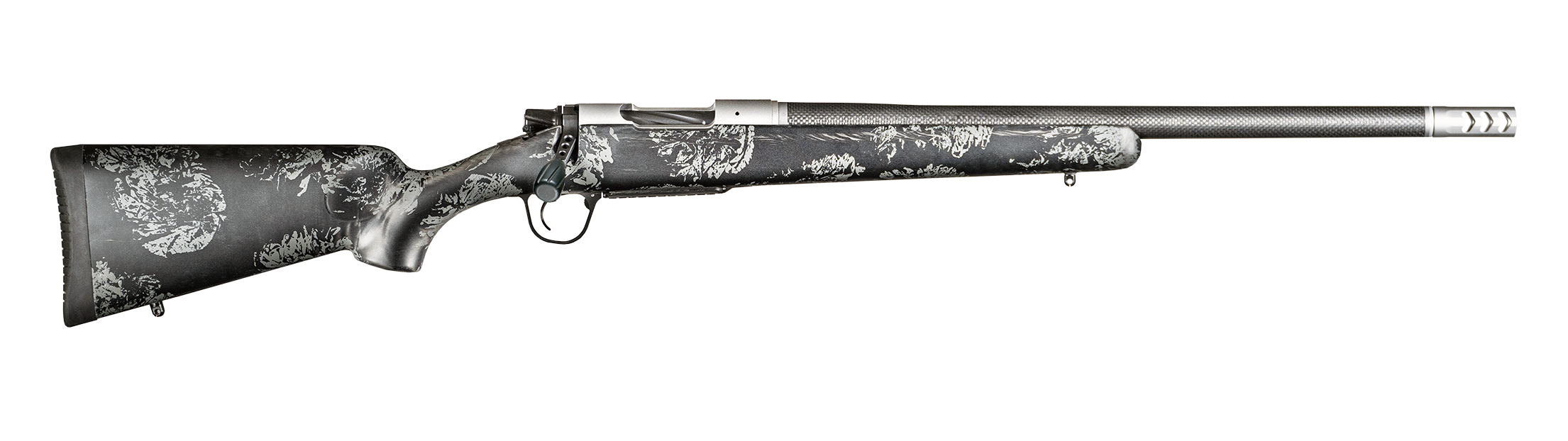
Ridgeline FFT
The Ridgeline FFT carries forward the lightweight mountain-rifle idea with an Aerograde carbon fiber wrapped barrel, FFT carbon fiber stock, stainless steel action, and field-ready chamberings built for serious hunting conditions.
Explore Ridgeline FFT
Conservation, Respect, and the Weight of the Decision
The hunt did not end with a full freezer. Moose and harvestable caribou evaded the group through wind, snow, sun, and rain. But the experience left something heavier than meat: a clearer understanding of the emotional complexity of hunting an apex predator.
The author reflected on the cubs seen throughout the trip, on the life of the old bear, and on the possibility of someday bringing his own son into country like that. Hunting, at its best, is not only about taking. It is about paying into the systems that protect habitat, fund wildlife management, and keep wild places intact for the next generation.
The final answer was not simple. Would he shoot a grizzly again? He still was not sure. But he did not regret meeting the king of that Brooks Range valley.
A great rifle is only half the story. The rest is judgment, preparation, respect for the animal, and the willingness to carry the weight of the decision.
Built for Big Country
Christensen Arms hunting rifles are built for the hunters who carry farther, glass longer, and need confidence when the shot finally comes together.
Lightweight. Accurate. Field proven. Explore Ridgeline FFT Shop Hunting Rifles