Hunting Guide
SUCCESSFUL
TURKEY HUNTING:
A PROVEN APPROACH
Tactics, Calling, Gear, and What Actually Works in the Field
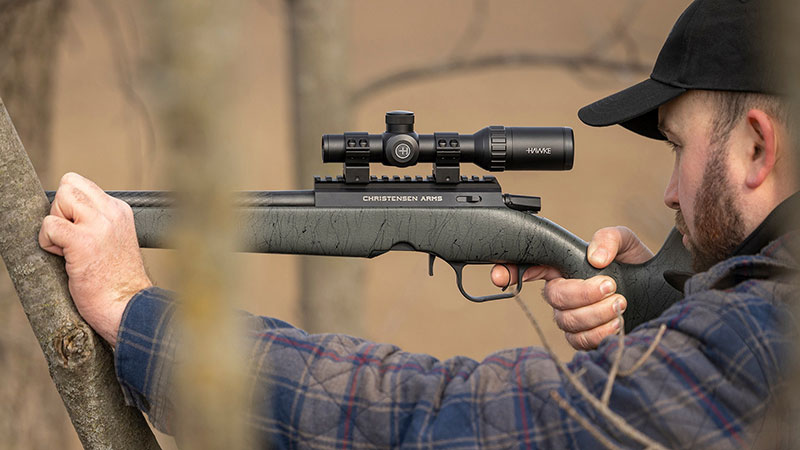
Turkey hunting looks simple on paper. Listen for a gobble, move in, make a few calls, take your shot. They have brains the size of a peanut and no real sense of smell, so it should be easy, right?
Wrong. Chasing turkeys is one of the most demanding and rewarding pursuits in the hunting world. This guide covers when to hunt, where to set up, how to call, and what gear helps you tag your first bird or put more birds on the ground.
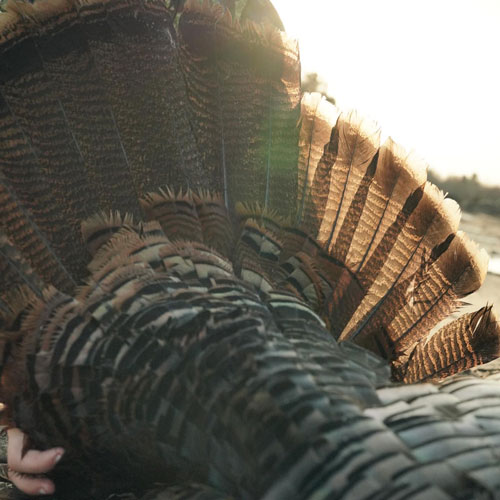 Photo: Hazy Mountain Media
Part 1: When to Turkey Hunt
Spring is the best time to turkey hunt. From late March through late May, depending on location and climate, male turkeys are at their most active and vocal, strutting and displaying for hens. Check your local regulations for exact season dates before heading out.
Fall turkey seasons exist in many states as well, and it is worth keeping a tag in your pocket during deer and elk season. Fall birds are trickier because they travel in flocks and are not in peak breeding mode, but opportunities are there if you are paying attention.
The Best Time of Day
The early bird gets the bird. The best window for turkey hunting is shortly after first light. Set up early, get into your blind before dawn, and listen for yelps, cackles, and gobbles as birds start moving. You might catch one flying off the roost.
Turkeys are most active during calm, clear mornings between 60-69 degrees. Activity slows in extreme heat or cold. Contrary to popular belief, a light rain can be good for turkey hunting because birds often move into open areas where they can see better.
Plan your hunts around calm, mild mornings for the highest probability of hearing birds and getting a tom to respond.
Part 2: Where to Hunt Turkeys
The simplest answer: hunt where you see the most turkeys. If you spot birds in a farmer's field on the drive out, do not be afraid to knock and ask for permission. Do not overlook public land either. A little extra effort into overlooked creek bottoms or back corners can pay off.
Public Land
Public land can produce success if you are willing to scout. Look for ridges, timber cuts, creek bottoms, and areas adjacent to private land. The birds are there. Most hunters just are not willing to walk far enough to find them.
Private Land
If you know a cooperative landowner, you are in good shape. If not, a polite phone call or knock on the door goes a long way. Spring turkey permission is often easier to get than deer hunting access, especially in agricultural areas where turkeys can become a nuisance.
Finding Turkey Habitat
Turkeys love open, brushy areas and grasslands rich in insects. They need cover for nesting, reliable water sources nearby, and trees for roosting. Digital mapping apps like HuntWise, HuntStand, and onX are useful for identifying ridges, roosting areas, and river banks before you ever set foot in the field.
Field edges are productive morning spots because birds often roost in trees surrounding a field and fly down to feed at first light. Dense timber and hardwood stands are worth hunting too, especially where you find acorns, feathers, tracks, and droppings under large roost trees.
Food and Water Sources
Turkeys eat green grasses, acorns, fruit, nuts, and insects. After a hard rain, check agricultural fields where they may be foraging for worms. Hens rarely nest far from reliable water, so creeks, springs, rivers, and ponds are all worth scouting.
Roosting a Bird
One of the most effective turkey hunting tactics is putting a bird to bed the evening before your hunt. Turkeys fly up to roost trees at or just after sunset. Find where your target tom roosts, then position yourself 100-200 yards away before first light the next morning.
Roosting a tom the night before your hunt dramatically increases your odds. Even if he flies off in a different direction, you will be close enough to call him back.
Part 3: How to Turkey Hunt
Rifle, Shotgun, or Bow?
Your weapon of choice is a personal decision, but always check your local regulations before choosing your setup. Rifles are only legal for turkey hunting in some states.
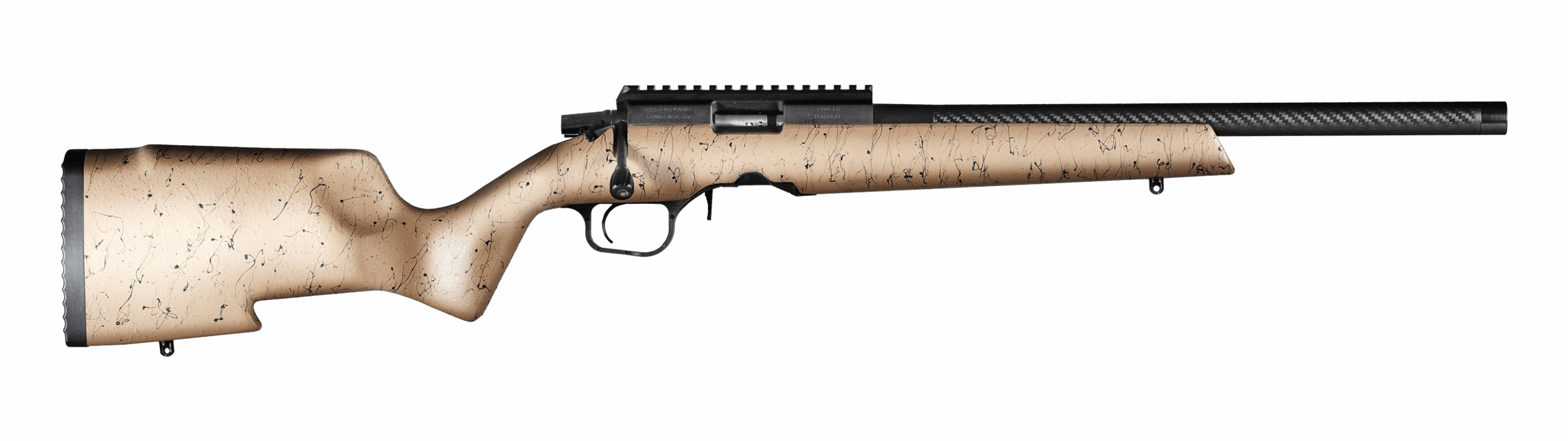
Christensen Arms Ranger
If you are hunting turkeys with a rifle, the Christensen Arms Ranger is a purpose-built option. Available in .22 LR, .22 WMR, and .17 HMR, the Ranger brings Christensen Arms carbon fiber precision to a lightweight, packable rimfire platform.
When rifle hunting turkeys, shot placement is everything. You are often aiming at a smaller target, so placing your shot strategically to avoid damaging meat is critical.
Shop the RangerIf you are hunting with a shotgun, pattern it before the season. Different combinations of ammunition, choke, and firearm produce different patterns, so you need to know your maximum effective range for a clean, ethical harvest.
Bowhunting turkeys requires a high level of proficiency. Know your effective range with the broadhead you plan to use. Some broadheads are designed specifically for head and neck shots, while fixed blades and mechanical broadheads can be used for either neck/head or body shots.
Know your maximum effective range with your chosen load or broadhead before the season opens.
Calling Turkeys
Calling is at the heart of turkey hunting. The goal is to mimic the sounds of a hen, or occasionally a gobbling tom, to draw birds into range. Learning to speak the language takes time and practice, but it is what makes turkey hunting so addictive.
- Cluck: Short, sharp notes used to get a turkey's attention and reassure an approaching gobbler.
- Purr: A soft, rolling sound hens make when content and feeding. Use it to relax a bird and coax him the last few yards.
- Yelp: The most common turkey call and the foundation of every turkey hunter's repertoire.
- Cutting: Sharp clucks combined with yelping, useful for locating gobblers and pulling in stubborn birds.
- Ki-ki-run: An excited hen call used to regroup a scattered flock. It can be effective in early season and fall hunting.
- Gobble: A tom's primary vocalization. Use it sparingly because it can attract other toms and hunters alike.
Types of Turkey Calls
There are dozens of call styles on the market. Being proficient in at least three types will give you versatility in the field.
- Mouth Call: A latex reed fitted to the roof of your mouth. It produces a wide range of sounds with both hands free.
- Pot and Striker: A friction call made with a striker and an aluminum, glass, or slate surface. It is user-friendly and effective for purring and cutting.
- Box Call: One of the easiest calls to learn and among the loudest. It is useful for locating gobblers on windy days.
All three have their place. There are also push calls, wing bones, and gobble tubes worth exploring as you develop your calling repertoire.
Want to Learn More About Turkey Calling?
Using Turkey Decoys
Decoys can be highly effective for drawing turkeys into range, but quality matters. Avoid shiny paint and reflective materials that look unnatural. Realistic decoys are worth the investment.
Set decoys in a natural position at a distance that gives you a clear shot. Different decoys produce different reactions. A strutter decoy paired with a hen can trigger an aggressive response from dominant toms, while some birds will avoid them entirely.
In open country, spread multiple decoys to create a convincing scene visible from a distance. In timber, fewer decoys and more calling is usually the right call. In thick cover, you often do not need decoys at all.
Staying Concealed
Turkeys have exceptional eyesight. Their ability to detect movement and identify what does not belong is unmatched. Cover your hands and face, stay completely still when a bird is in range, and in a ground blind wear black to blend into the shadows.
Get Out There
Turkey hunting is one of the most exciting and challenging pursuits in the hunting world, and one of the most accessible. It is great for new hunters and seasoned veterans alike, and it fills the space between deer and elk seasons with something genuinely demanding.
It connects you to the woods in spring, requires real skill development, and puts quality wild protein on the table. Put in the work before the season: scout, practice your calls, pattern your gun, and the results will follow.
Built for the Hunt
The Christensen Arms Ranger brings sub-MOA precision to the rimfire platform in .22 LR, .22 WMR, and .17 HMR.
Turkey season is short. Make it count. Shop the Ranger We use cookies on our website to give you the most relevant experience by remembering your preferences and repeat visits. By clicking "Allow all", you consent to the use of ALL the cookies.