

Lightweight Rifle Comparison
RIDGELINE FFT
VS. MESA FFT:
WHICH FITS
YOUR HUNT?
Compare weight, barrel construction, chamberings, features, and field purpose


The best lightweight hunting rifle is the one that balances carry weight, shootability, and field purpose for the hunt ahead. The Ridgeline FFT and Mesa FFT share Christensen Arms precision, an FFT carbon fiber stock, and a sub-MOA accuracy guarantee, but each rifle reaches its field-ready weight differently.
The Christensen Arms Ridgeline FFT starts lighter and pairs its FFT stock with an Aerograde carbon fiber-wrapped barrel. The Christensen Arms Mesa FFT uses the same lightweight stock concept with a stainless-steel featherlight-contour barrel and a lower starting price. The right choice depends on the hunt, chambering, preferred barrel construction, and how much weight matters in the complete rifle setup.
Ridgeline FFT vs Mesa FFT at a Glance
| Feature | Ridgeline FFT | Mesa FFT |
|---|---|---|
| Starting Weight | 5.4 lbs | 5.9 lbs |
| Barrel | 416R stainless steel with Aerograde carbon fiber wrap | 416R stainless steel, featherlight contour |
| Stock | FFT carbon fiber sporter stock | FFT carbon fiber sporter stock |
| Muzzle Device | Removable stainless side-baffle brake | Removable seamless radial brake |
| Barrel Lengths | 16.25 to 24 inches, depending on chambering | 20 or 22 inches, depending on chambering |
| Accuracy | Sub-MOA guarantee* | Sub-MOA guarantee |
.375 H&H configurations do not qualify for the accuracy guarantee. Specifications and available configurations can change, so confirm the current product page before ordering.
Ridgeline FFT
Carbon-barreled, broad in configuration, and built for hunters who prioritize the lightest starting platform in this comparison.
View Ridgeline FFTMesa FFT
A stainless-barreled lightweight platform for hunters who want FFT stock weight savings and practical all-terrain performance.
View Mesa FFT
Carbon Fiber Barrel vs Stainless Steel Barrel
The Ridgeline FFT uses a 416R stainless-steel barrel wrapped in Christensen Arms Aerograde carbon fiber. That construction helps the rifle reach its 5.4-pound starting weight and is the defining feature for hunters comparing carbon-barreled lightweight hunting rifles.
The Mesa FFT uses a free-floating 416R stainless-steel barrel with a featherlight contour. It starts only half a pound heavier while keeping the FFT stock, precision action, and sub-MOA guarantee. For hunters who prefer a traditional stainless barrel or want to place more of the budget into optics and other field gear, the Mesa FFT presents a clear alternative.
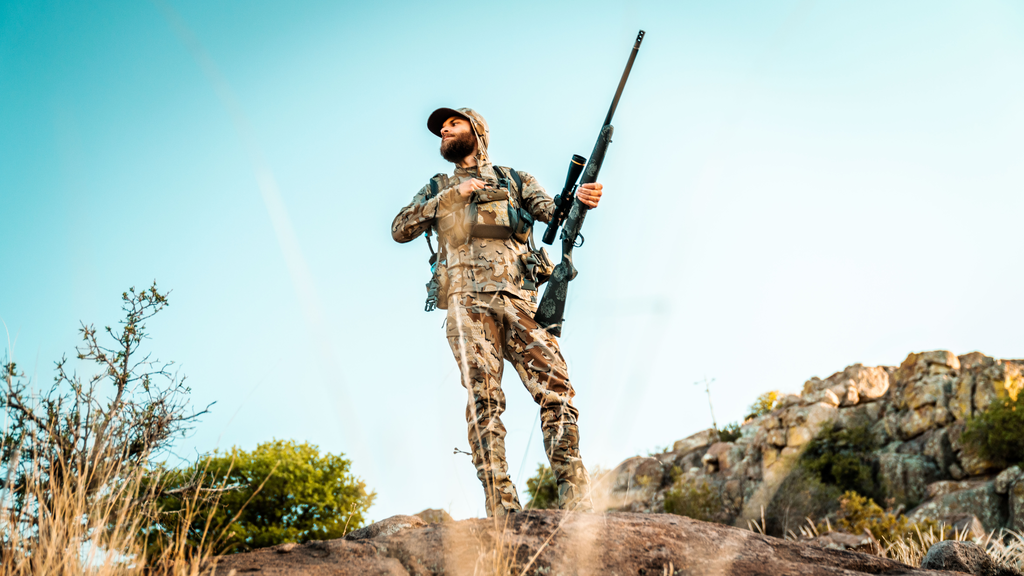
How Much Does Half a Pound Matter?
The Ridgeline FFT begins 0.5 pound lighter than the Mesa FFT. That difference can matter when comparing lightweight hunting rifles for steep, high-mileage hunts, but starting weight is only the beginning. Optic, rings, sling, ammunition, bipod, suppressor, and other accessories determine the rifle that is actually carried.
Compare both rifles in the intended field configuration. A heavier optic can erase the starting-weight difference, while barrel length and a muzzle device can change balance. The better rifle is the one that remains comfortable to carry and predictable to shoot after the complete setup is assembled.
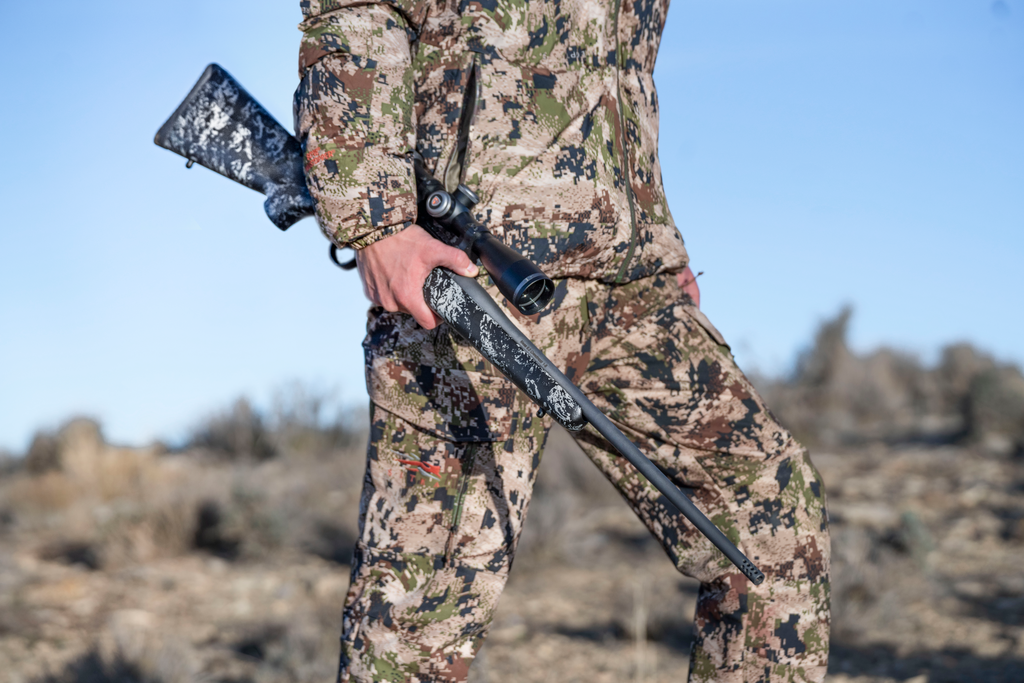
Chamberings and Barrel-Length Options
The Ridgeline FFT offers the broader current chambering list, with barrel lengths ranging from 16.25 to 24 inches depending on configuration. Its listed options extend from smaller short-action cartridges through magnum and specialized big-game choices.
The Mesa FFT keeps the lineup more focused. Its current product page lists nine chamberings with 20- or 22-inch barrels, including popular options such as 6.5 Creedmoor, 6.5 PRC, 7mm PRC, .308 Winchester, .300 Winchester Magnum, and .300 PRC. Hunters should confirm current chambering, handedness, twist rate, and barrel length on each product page before purchasing. For standardized cartridge and chamber information, consult SAAMI's cartridge and chamber drawings.
How to Choose the Best Lightweight Hunting Rifle
Minimum Weight Is the Priority
You want the lighter starting platform, a carbon fiber-wrapped barrel, more chambering choices, or shorter and longer barrel options beyond the Mesa FFT lineup.
Stainless Simplicity Fits
You want an FFT-stocked lightweight rifle with a stainless featherlight-contour barrel, a focused chambering selection, and a lower starting price.
Count Complete Weight
The Ridgeline FFT's lower starting weight leaves more room for optics and accessories before the complete system reaches its target weight.
Value Practical Balance
The Mesa FFT remains under six pounds at its starting weight and combines a stainless barrel with the same FFT sporter-stock concept.
- Choose the chambering and barrel length around the hunt, ammunition availability, and recoil you can control.
- Compare complete rifle weight after adding the optic, mounts, sling, ammunition, and muzzle device.
- Confirm stock fit and eye position while wearing the clothing used in the field.
- Review the current product page for configuration availability and left-handed options.
Best Lightweight Hunting Rifle FAQ
Which is the best lightweight hunting rifle?
The Ridgeline FFT starts at 5.4 pounds, while the Mesa FFT starts at 5.9 pounds. The better choice depends on the preferred barrel construction, chambering, complete setup weight, and intended hunt.
Do both rifles use an FFT stock?
Yes. Both current product pages specify a Christensen Arms sporter-style FFT carbon fiber stock with carbon fiber bedding pillars, spot bedding, and a recoil pad.
What is the biggest difference?
The barrel system is the clearest distinction. The Ridgeline FFT uses an Aerograde carbon fiber-wrapped barrel, while the Mesa FFT uses a stainless-steel featherlight-contour barrel.
Do both rifles have a sub-MOA guarantee?
Both product pages list a sub-MOA guarantee, although the Ridgeline FFT page excludes its .375 H&H configuration. Review the current product details for the exact configuration.
Two Lightweight Rifles. One Clear Choice.
Compare current chamberings, barrel lengths, finishes, and product details before choosing the Christensen Arms rifle built for your hunt.
Compare the Ridgeline FFT and Mesa FFT We use cookies on our website to give you the most relevant experience by remembering your preferences and repeat visits. By clicking "Allow all", you consent to the use of ALL the cookies.
