Field Performance Guide
LIGHTWEIGHT RIFLE:
ACCURACY, CARRY
& PERFORMANCE
How rifle weight changes fatigue, handling, recoil, stability, and confidence in the field

A lightweight rifle can make long approaches, steep climbs, and all-day hunts more manageable, but weight also changes how a rifle balances, recoils, and settles on target. The best hunting rifle is not simply the lightest one available. It is the rifle that carries efficiently and still gives the shooter enough control to make a confident shot.
Understanding rifle weight as part of the complete shooting system helps hunters choose more intelligently. Bare rifle weight matters, but so do the optic, rings, sling, ammunition, bipod, muzzle brake, and suppressor that may travel into the field with it.
What Does Lightweight Rifle Weight Really Mean?
Published specifications usually describe the rifle before accessories are installed. Once a hunting setup is complete, its field-ready weight can be substantially higher. A scope and rings may add more than a pound, while a loaded magazine, sling, bipod, and suppressor continue to change both total weight and balance.
The Starting Point
The manufacturer's listed weight before optics, ammunition, and field accessories are added.
The Weight You Carry
The complete setup, including the optic, mounts, sling, ammunition, and attached accessories.
Where Weight Sits
Two rifles with the same total weight can handle differently when one is muzzle-heavy or rear-heavy.
What the Hunt Demands
Backcountry, timber, stand, and long-range hunts place different demands on rifle weight.
Compare complete configurations, not bare-rifle numbers alone. The best lightweight rifle should remain balanced after the optic and accessories you actually use are installed.
How a Lightweight Rifle Changes Carry and Handling
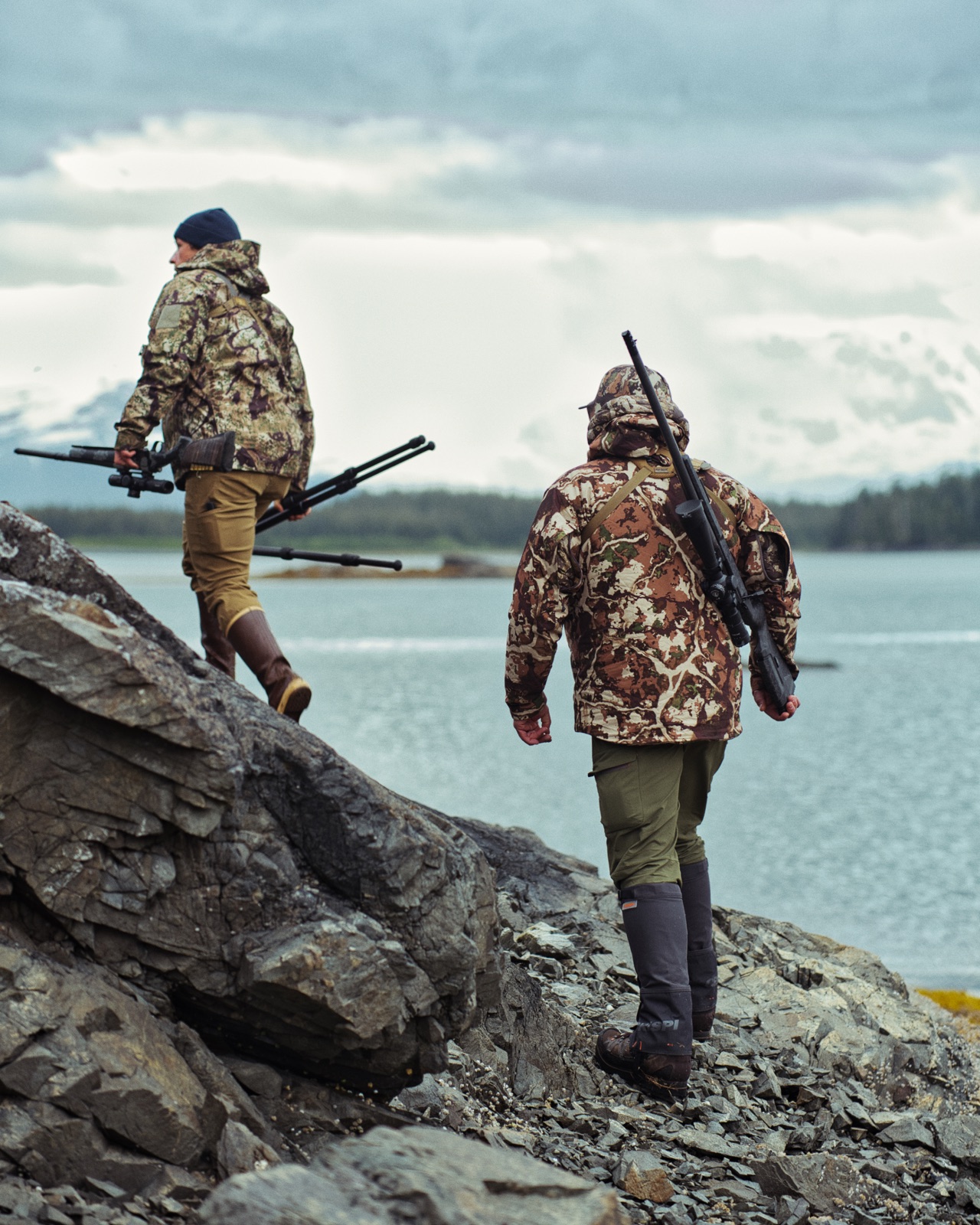
Carry is where reduced weight delivers its clearest benefit. A rifle that trims one or two pounds may conserve energy across miles of broken terrain, reduce strain during elevation gain, and leave more capacity for water, optics, safety gear, or packed meat.
Lower weight can also make a rifle feel faster when it comes off a sling. It may be easier to maneuver in timber, move around a blind, or position from improvised support. Balance still matters: saving weight near the muzzle can make the rifle feel lively, while too much rear bias may make it harder to settle naturally.
This is why a lightweight hunting rifle should be evaluated in the positions where it will be used. Shoulder it, carry it with the intended sling, and test how it settles from kneeling, sitting, prone, and supported field positions.
Does a Lightweight Rifle Affect Accuracy?
A light rifle can be mechanically accurate. Weight does not determine the quality of the barrel, chamber, action, bedding, trigger, or ammunition. It does, however, affect how easily the shooter can hold the rifle steady and manage movement through the shot.
Heavier rifles tend to resist small inputs and feel more planted from a bench or supported position. A lightweight rifle is easier to disturb with breathing, trigger pressure, wind, and inconsistent shoulder contact. That makes solid fundamentals and a stable field position especially important.
Independent field testing also shows that lightweight rifles can deliver strong precision when balance, build quality, and shooting technique work together. For a practical discussion of the difference between rifle weight and shooter skill, see these long-range shooting tips from Field & Stream.
| Weight Factor | Potential Benefit | What to Manage |
|---|---|---|
| Lower Mass | Easier carry and faster repositioning | More visible movement in unsupported positions |
| Balanced Build | Natural point of aim and smoother handling | Optics and accessories can shift the balance |
| Rigid Components | Supports repeatable alignment without unnecessary mass | Material quality and engineering matter |
| Stable Support | Lets a light rifle perform closer to its mechanical potential | Requires deliberate field-position setup |
Rifle Weight, Recoil, and Follow-Through
When the cartridge and load remain the same, a lighter rifle generally moves more under recoil than a heavier rifle. The shooter may feel a sharper impulse, and the optic may leave the target more aggressively. That can make follow-through and spotting an impact more difficult.
Recoil is a complete-system issue. Stock fit, recoil pad design, muzzle brake or suppressor, shooting position, and technique all influence what the shooter experiences. Cartridge choice matters too. A lightweight rifle chambered in a moderate cartridge may be easier to shoot well than an ultra-light rifle chambered for a hard-recoiling magnum.
- Fit the rifle: Consistent cheek weld and shoulder contact help control movement.
- Choose the cartridge deliberately: Match recoil and terminal performance to the hunt rather than selecting power in isolation.
- Use support: A backpack, bipod, tripod, tree, or natural rest can stabilize a light rifle.
- Practice follow-through: Stay behind the rifle and maintain the sight picture through recoil.
How Carbon Fiber Reduces Rifle Weight
Reducing weight responsibly requires more than removing material. The rifle still needs a stable stock, rigid barrel structure, dependable bedding, durable action, and consistent trigger. Advanced composites allow designers to place strength where it is needed without relying on the mass of traditional materials.
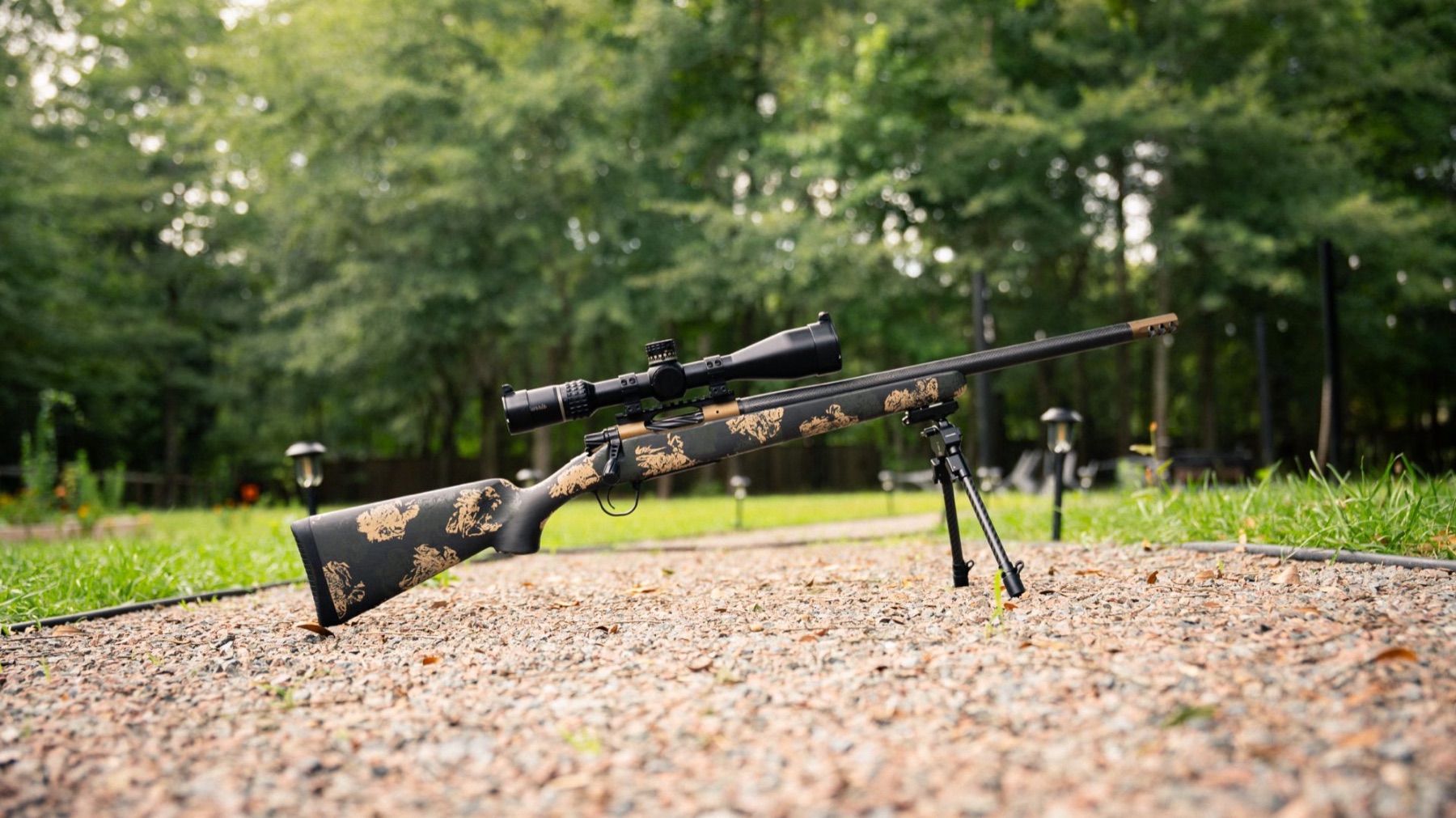
Christensen Arms uses carbon fiber in two key areas. Aerograde carbon fiber-wrapped barrels pair a 416R stainless steel core with a composite exterior, while Flash Forged Technology creates lightweight carbon fiber stock components. Together, those systems reduce carry weight while supporting the rigidity expected from a precision hunting platform.
Explore the construction behind Christensen Arms carbon fiber barrel technology and Flash Forged Technology.
How to Choose the Right Lightweight Rifle
The right target weight depends on the terrain, distance carried, expected shot positions, cartridge, recoil tolerance, and accessories. A mountain hunter may prioritize every ounce, while a hunter walking a short distance to a stand may benefit more from extra stability.
Ridgeline FFT
Starts at 5.4 pounds with an FFT stock and carbon fiber-wrapped barrel for demanding mountain carry.
Explore Ridgeline FFTMesa FFT
Starts at 5.9 pounds and pairs an FFT carbon fiber stock with a stainless free-floating barrel.
Explore Mesa FFTRifle Quiz
Compare terrain, game, carry needs, and shooting priorities to narrow the Christensen Arms lineup.
Take the Rifle Quiz- Calculate field-ready weight with your intended optic, mounts, sling, ammunition, and muzzle device.
- Choose a cartridge you can control from realistic hunting positions.
- Check the balance after accessories are installed, especially a suppressor or bipod.
- Prioritize stock fit, trigger control, and a stable shooting position alongside low weight.
- Practice with the complete hunting setup before relying on it in the field.
Lightweight Rifle FAQ
What is considered a lightweight rifle?
There is no universal cutoff, but many modern lightweight bolt-action hunting rifles fall near or below seven pounds before optics and accessories. Intended use and field-ready weight matter more than a single category line.
Are lightweight rifles less accurate?
Not inherently. A well-built light rifle can be mechanically precise, although its lower mass may require better support and more disciplined shooting fundamentals.
Do lightweight rifles recoil more?
With the same cartridge and load, reducing rifle mass generally increases rifle movement and felt recoil. Stock fit, recoil pads, brakes, suppressors, and technique can help manage it.
What matters more than rifle weight?
Balance, fit, cartridge choice, build quality, field support, and the shooter's ability to control the complete setup all matter alongside weight.
Carry Less. Hunt With Confidence.
Explore lightweight Christensen Arms rifles engineered to balance field-ready carry weight, precision materials, and dependable performance.
Explore Lightweight Rifles We use cookies on our website to give you the most relevant experience by remembering your preferences and repeat visits. By clicking "Allow all", you consent to the use of ALL the cookies.