

High-Country Rifle Guide
MOUNTAIN GOAT
& SHEEP HUNTING:
CHOOSING THE
RIGHT RIFLE
Balance carry weight, control, and field-ready confidence for steep, rugged terrain
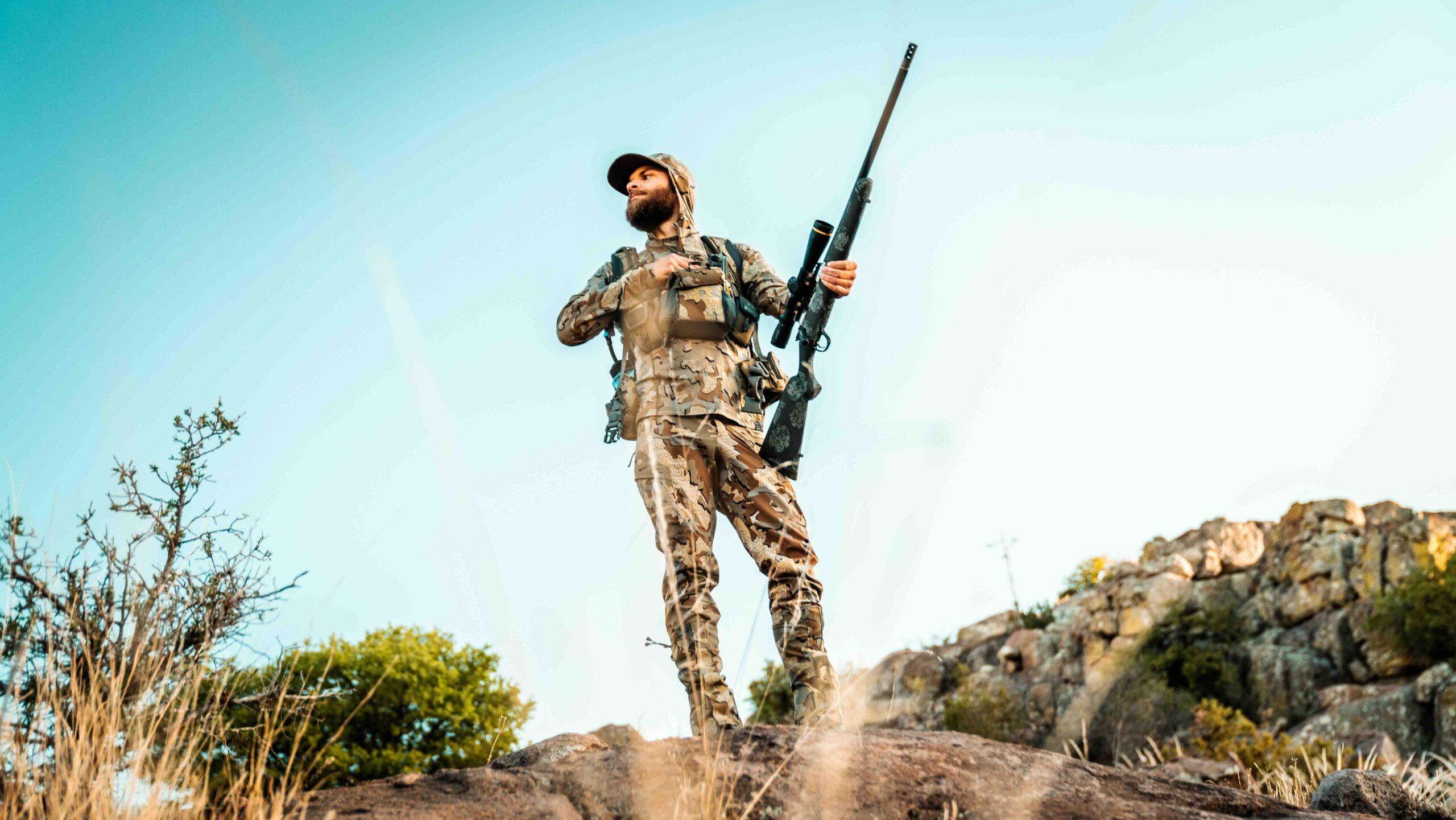
A mountain hunting rifle has to earn every ounce it carries. Sheep and mountain goat country can demand long approaches, sustained elevation gain, exposed weather, and a final shot from terrain that rarely offers a level bench or a perfect prone position.
The right rifle is not simply the lightest model on the rack. It should carry efficiently while remaining stable, controllable, weather-ready, and familiar when the opportunity arrives. Use this guide to choose a sheep hunting rifle or mountain goat hunting rifle around the realities of steep, rugged terrain.
Why Mountain Terrain Changes Rifle Priorities
In steep country, a rifle may spend hours strapped to a pack or carried across sidehills before it is ever shouldered. Lower weight can reduce fatigue, but the rifle must still settle quickly when footing, wind, and shooting angles are less than ideal. The goal is useful weight in a balanced system, not weight reduction at any cost.
Climb Efficiently
Keep the complete setup manageable across long approaches and repeated elevation changes.
Settle the Rifle
Preserve enough balance and stability to build a confident position on uneven ground.
Expect Exposure
Choose materials and finishes suited to moisture, cold, dust, rock, and sudden weather.
Shoot What You Know
Use a cartridge and rifle you can control after a hard climb and from realistic supports.
Choose for the hunt you will actually make. Distance carried, elevation, expected weather, shot positions, recoil tolerance, and the rest of the gear in your pack all belong in the decision.
Measure the Complete Mountain Hunting Rifle
Published rifle weight is only the starting point. The optic, rings, sling, ammunition, bipod, muzzle device, and suppressor can materially change total weight and balance. Assemble the intended field configuration before comparing options, then weigh the complete system.
A lightweight rifle for mountain hunting should also carry naturally. A setup that becomes sharply muzzle-heavy after adding a suppressor may feel more tiring than its scale weight suggests. Likewise, an oversized optic can erase much of the benefit of a light rifle and make it slower to stabilize.
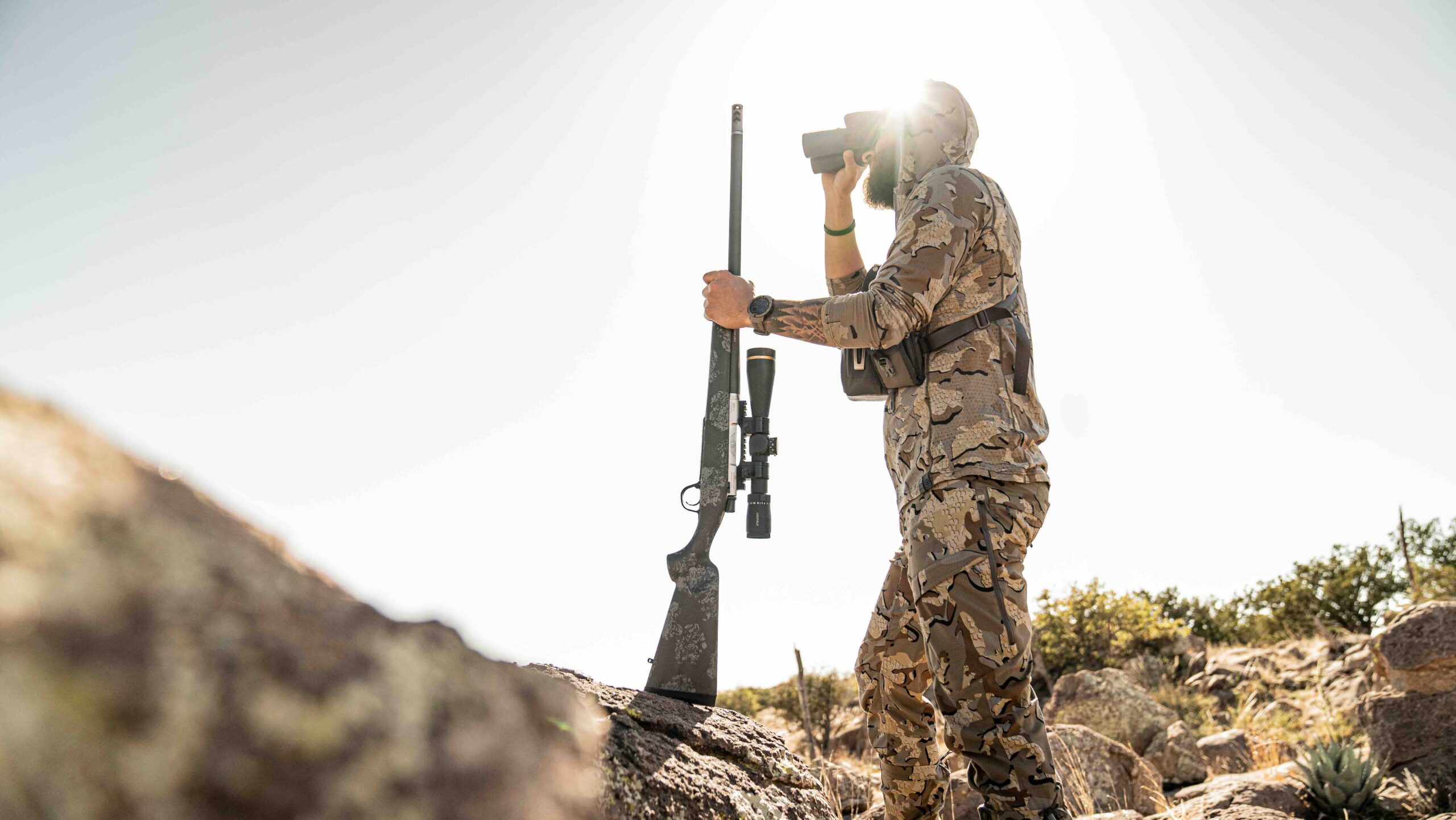
Balance Low Weight With Shootability
A lighter rifle can be mechanically precise, but lower mass makes small errors easier to see. Breathing, trigger pressure, wind, and inconsistent shoulder contact can disturb the sight picture. A stable stock fit, predictable trigger, balanced optic, and repeatable field support help a light rifle perform closer to its potential.
Recoil deserves equal attention. With the same cartridge and load, a lighter rifle generally moves more than a heavier one. Select a chambering you can control from field positions after exertion, not merely one that looks capable on paper.
| Priority | Mountain Benefit | What to Confirm |
|---|---|---|
| Field Weight | Less fatigue on long, steep approaches | Include optic, mounts, sling, ammo, and muzzle device |
| Balance | Faster positioning and steadier natural aim | Test after all accessories are installed |
| Recoil | Better control and follow-through | Practice the exact cartridge and load from field positions |
| Support | More stability on broken terrain | Train with the pack, bipod, tripod, or natural rest you carry |
Choose Materials for Exposed Conditions
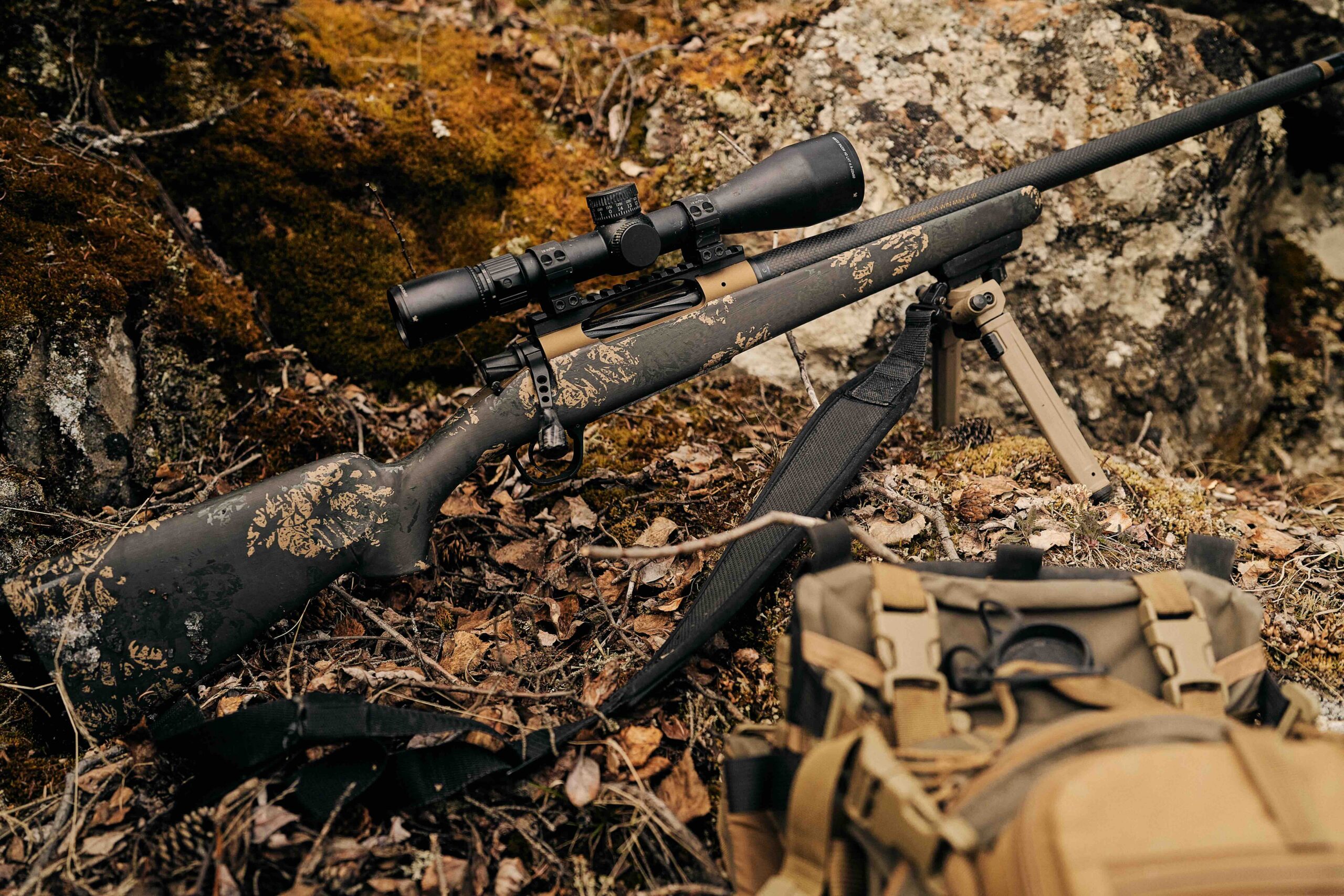
Mountain weather can change quickly, and the rifle may contact rain, snow, dust, scree, pack straps, and wet vegetation in the same day. Carbon fiber stocks, stainless components, durable finishes, and simple field care can help a rifle remain dependable when conditions deteriorate.
Reliability still depends on preparation. Confirm function before the hunt, protect the muzzle from debris, keep the action reasonably clean and dry, and know how temperature and elevation may affect the complete rifle and ammunition system.
- Protect the bore: Prevent water, snow, and loose debris from entering the muzzle.
- Check interfaces: Inspect action screws, optic mounts, sling points, and accessories before departure.
- Limit excess oil: Follow the rifle manual and avoid attracting grit with unnecessary lubricant.
- Reconfirm after impact: If the rifle takes a hard fall, inspect it and verify zero before relying on it.
Choose the Chambering Around the Hunt
Start with the game, legal requirements, expected shot distance, bullet construction, and the performance needed at the target. Then consider recoil, ammunition availability, barrel length, and the shooter's ability to make a first shot from a realistic position.
A capable cartridge is only useful when the hunter can shoot it well. Confirm trajectory and wind data with the exact hunting load, and establish a personal maximum distance based on demonstrated field accuracy rather than a theoretical ballistic limit.
Practice for Steep-Angle Field Positions
Confirm zero from a bench, then train away from it. Practice prone over a pack, seated, kneeling, and supported by a tripod or natural rest. Wear the pack and clothing you expect to use, and learn how the rifle comes off its carry system without sacrificing muzzle control.
Steep uphill or downhill shots can change body position and the way the rifle recoils. Build the most stable position terrain allows, keep the optic's reticle level, account for wind, and pass when the support, range, background, or recovery plan is not right.

Christensen Arms Rifles for Mountain Hunts
These three platforms approach the mountain rifle differently. Compare their complete field configurations, available chamberings, fit, and handling before choosing.
Ridgeline FFT
An FFT-stocked, carbon-barreled platform focused on minimizing carry weight in demanding terrain.
Explore Ridgeline FFTMesa FFT
An FFT carbon fiber stock paired with a free-floating stainless barrel for a light, practical field setup.
Explore Mesa FFTModern Carbon Rifle
A carbon-barreled platform with an adjustable cheek riser and integrated field attachment features.
Explore MCR- Calculate complete field weight with the optic, mounts, sling, ammunition, and muzzle device installed.
- Shoulder the rifle with hunting layers and confirm repeatable eye position and trigger reach.
- Choose a cartridge and load you can control from supported field positions.
- Confirm reliable feeding, extraction, safety operation, and zero before the hunt.
- Carry and practice with the finished setup before committing it to sheep or goat country.
Mountain Hunting Rifle FAQ
How light should a mountain hunting rifle be?
There is no universal target. Compare complete field-ready weight with the distance carried, terrain, cartridge, recoil tolerance, and the stability you need for realistic shot positions.
What makes a good sheep hunting rifle?
A good sheep hunting rifle combines manageable carry weight with dependable function, weather-ready construction, proper fit, a controllable chambering, and verified accuracy from field support.
Should a mountain goat hunting rifle have a short barrel?
A shorter barrel may improve maneuverability and reduce weight, but barrel length also affects velocity, balance, blast, and suppressor handling. Evaluate the complete configuration and chosen load.
Is the lightest rifle always best for mountain hunting?
No. Very low weight can increase movement and recoil. The better choice is the lightest rifle you can carry efficiently and still control confidently from real field positions.
Built for the Climb. Ready for the Shot.
Explore Christensen Arms rifles that balance mountain-ready carry weight, dependable materials, and field-proven precision.
Explore Lightweight Hunting Rifles We use cookies on our website to give you the most relevant experience by remembering your preferences and repeat visits. By clicking "Allow all", you consent to the use of ALL the cookies.
