Optics Guide
SCOPE RINGS:
A COMPLETE
GUIDE
How to Choose the Right Mounting System for Your Rifle
Scope rings are one of the smallest parts of a rifle system, but they carry one of the biggest responsibilities: keeping your optic secure, aligned, and repeatable through recoil, field carry, weather, and hard use.
This guide explains how optic rings work, how to choose the right tube size and height, when to use a cantilever mount, and which Christensen Arms scope rings fit your rifle and shooting style.
What Are Scope Rings?
Scope rings clamp the optic tube and attach it to the rifle's base or rail. Their job sounds simple, but precision matters. A quality ring system keeps the scope from shifting under recoil, maintains alignment with the rifle, and supports consistent zero from the first shot to the last.
When scope rings are mismatched, underbuilt, over-torqued, or installed at the wrong height, accuracy can suffer. The optic may move, the tube may be stressed, the reticle may cant, or the shooter may struggle to find a natural cheek weld.
Your rifle, barrel, trigger, and optic can all be excellent, but if the scope mount is weak, the entire system is compromised.
Start With Tube Size and Rail Fit
The first step is matching the rings to the scope tube. Common tube sizes include 1 inch, 30mm, and 34mm. The ring diameter must match the optic tube exactly. A 30mm scope does not belong in 1-inch rings, and a 34mm precision optic needs rings built for that larger tube.
The second step is matching the ring base to the rifle's mounting system. Christensen Arms PRSR rings are built for Picatinny-style mounts and are NATO-STANAG compatible, giving shooters a secure interface across a wide range of modern rails and bases.
- 1-inch tubes: Common on traditional hunting scopes and lighter field optics.
- 30mm tubes: Popular for modern hunting and long-range scopes with increased adjustment range.
- 34mm tubes: Common on larger tactical and precision optics with tall turrets and expanded internal travel.
- Picatinny rails: A versatile mounting interface that gives shooters flexibility for eye relief and ring placement.
How to Choose Scope Ring Height
Ring height determines how high the optic sits above the rifle. The goal is simple: mount the scope as low as practical while still clearing the barrel, rail, bolt handle, and scope covers, and while preserving a comfortable cheek weld.
A large objective lens often requires medium or high rings. A compact hunting scope may work better with low or medium rings. The right answer depends on the optic, rifle, rail height, and how naturally your eye aligns behind the scope.
For a more technical ring-height calculation, Warne offers a helpful scope ring height guide that explains how objective radius, tube radius, and base height work together.
Too low can create clearance problems. Too high can force a poor cheek weld. The right height keeps the optic clear and your head position natural.
Ultralight Rings vs. Tactical Rings vs. Cantilever Mounts
Different rifles and shooting styles call for different mounting systems. Here is the simplest way to think about the Christensen Arms optic mount lineup:
| Mount | Best Use | Tube Sizes | Key Advantage |
|---|---|---|---|
| PRSR-X2 Ultralight | Hunting rifles and lightweight builds | 1 inch, 30mm | Low weight with strong 7075/T6 construction |
| PRSR-HD Tactical | Precision, tactical, and long-range rifles | 30mm, 34mm | 6-bolt caps and removable anti-cant level |
| PRSR Cantilever | MSR and AR-style platforms | 1 inch, 30mm | Forward optic placement and MSR ideal height |
PRSR-X2 Ultralight Scope Rings
The Ultralight PRSR-X2 Scope Rings are built for hunters who want a strong optic mounting platform without adding unnecessary weight to the rifle. Precision CNC machining, 7075/T6 aluminum construction, hardcoat anodizing, and stainless steel hardware make them a natural fit for backcountry and all-season hunting rifles.
Available for 1-inch tubes in low and medium heights, and 30mm tubes in low, medium, and high heights, the PRSR-X2 rings cover many common hunting optic setups while keeping the build clean and efficient.
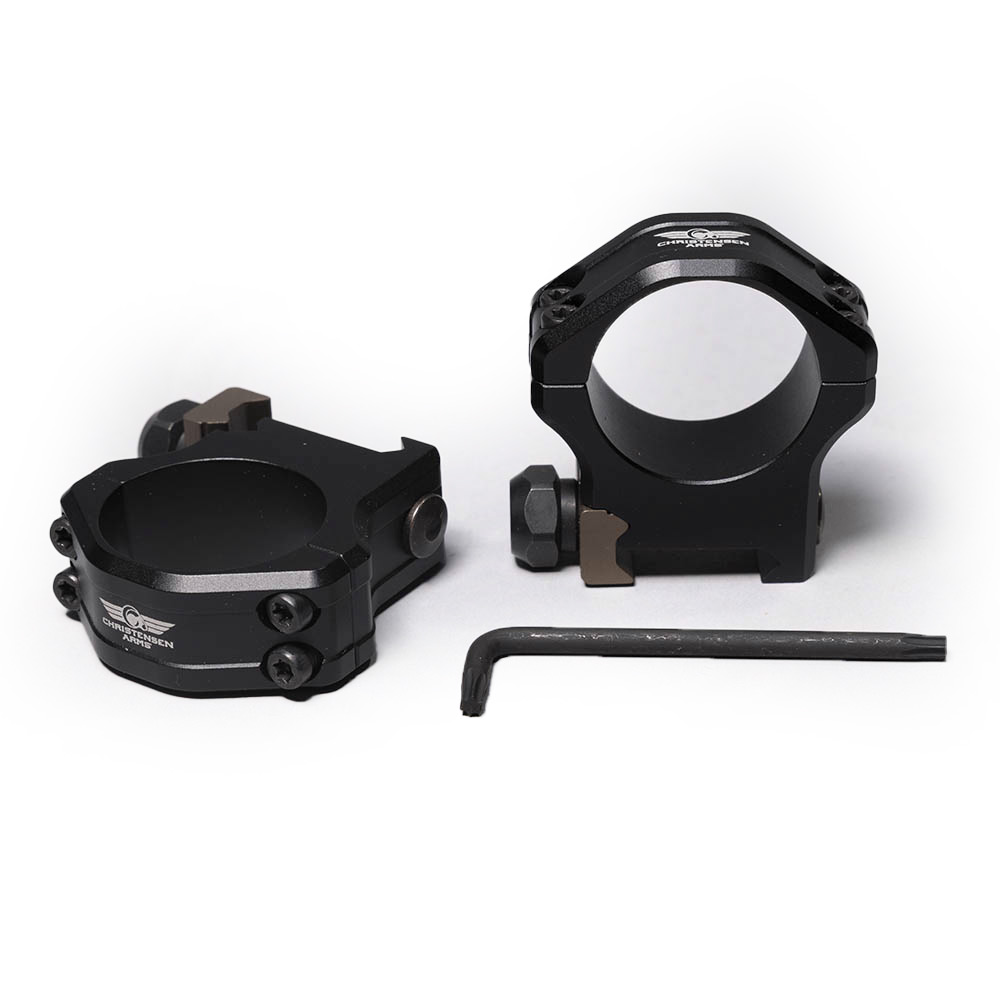
Ultralight PRSR-X2 Scope Rings
Lightweight precision rings for hunting rifles and streamlined field builds. Built from 7075/T6 aluminum with a hardcoat anodized finish and stainless steel hardware.
Shop PRSR-X2 RingsPRSR-HD Tactical Scope Rings
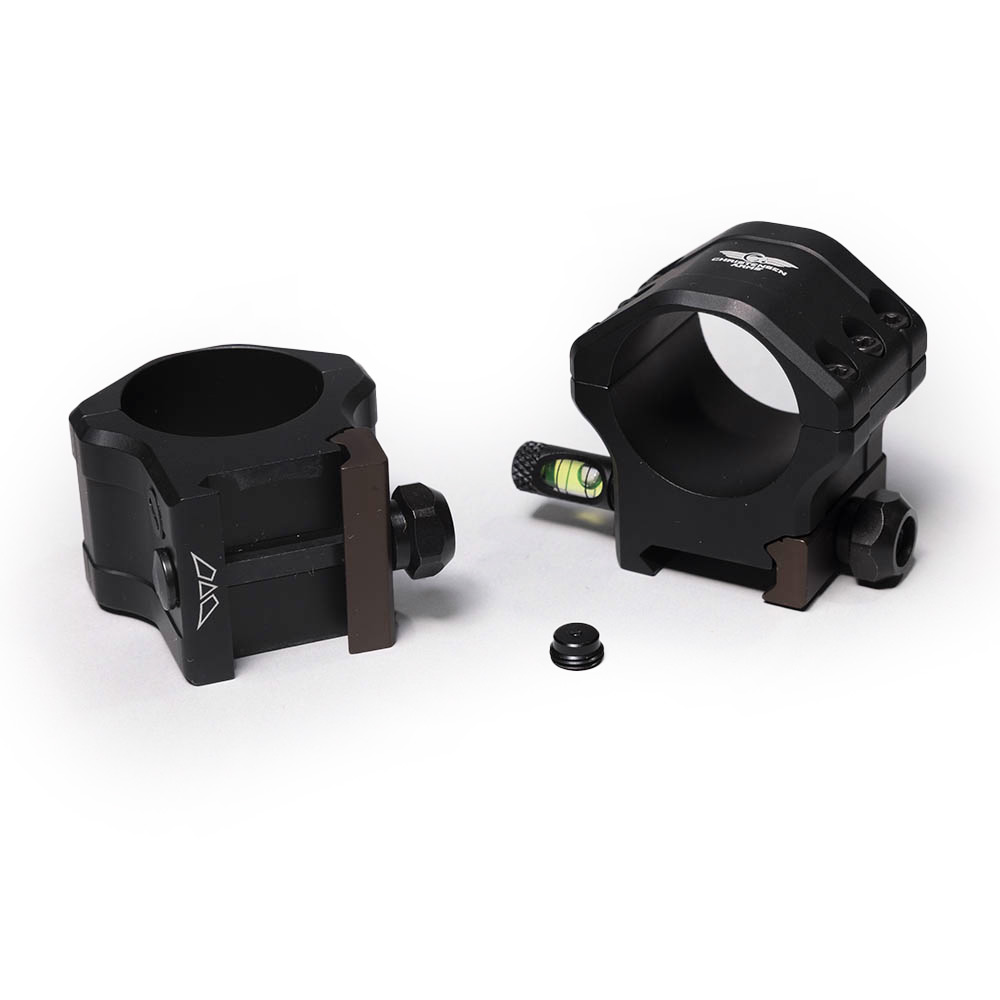
The Tactical PRSR-HD Scope Rings are built for shooters who prioritize maximum optic security, long-range consistency, and precision alignment. The 6-bolt cap design gives the scope a secure hold, while the removable anti-cant bubble level helps shooters keep the rifle level before breaking the shot.
These rings are available for 30mm and 34mm tubes in medium and high options, making them a strong match for larger precision optics, tactical scopes, and rifles used beyond typical hunting distances.
Tactical PRSR-HD Scope Rings
Precision CNC-machined tactical rings with 6-bolt caps and a removable anti-cant bubble level for long-range accuracy and repeatable alignment.
Shop PRSR-HD RingsWhen to Use a Cantilever Scope Mount
A cantilever scope mount is designed to position the optic farther forward than traditional rings. That makes it especially useful on MSR and AR-style platforms, where receiver length, charging handle clearance, and eye relief often require a different mounting geometry.
The Christensen Arms PRSR Cantilever Scope Mount is built from lightweight 6061 T6 aluminum with a hardcoat anodized finish and stainless steel hardware. It is available for 1-inch and 30mm scopes.
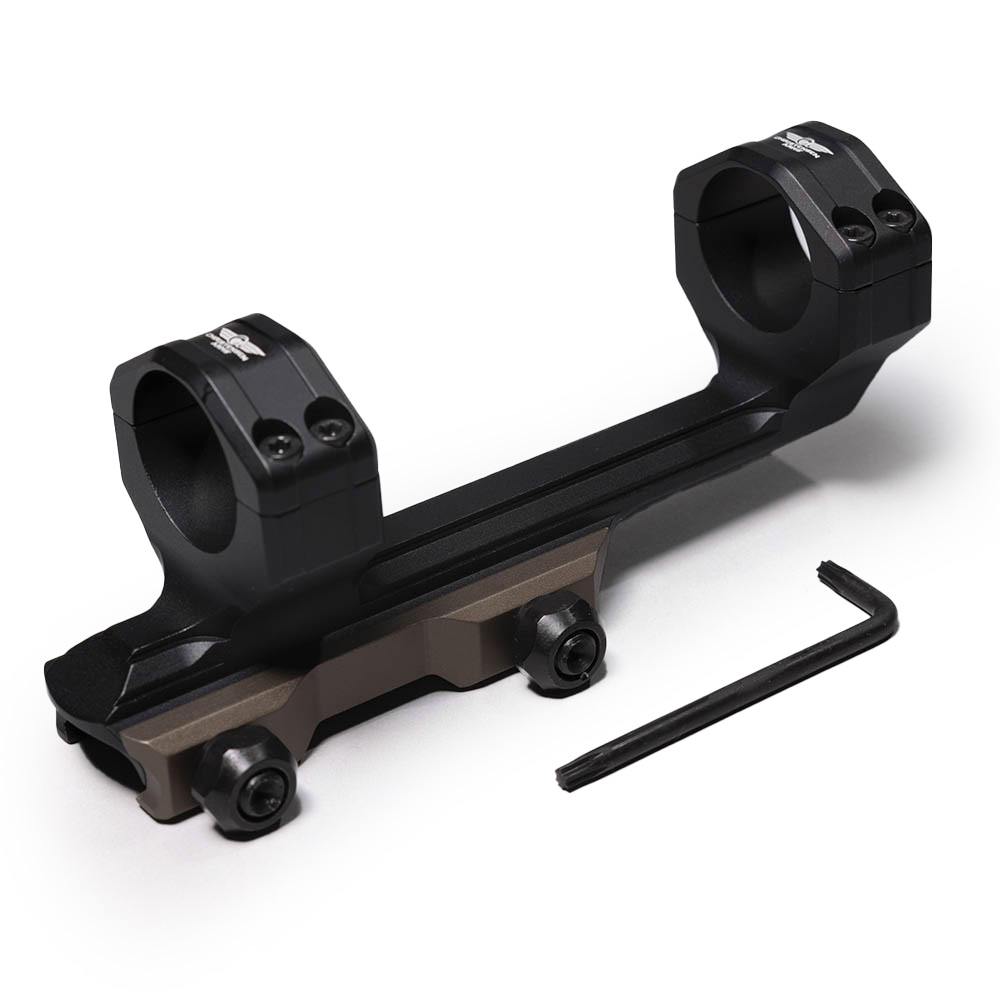
PRSR Cantilever Scope Mount
Purpose-built for MSR platforms, the PRSR Cantilever Mount gives shooters forward optic placement, a rigid 6061 T6 aluminum foundation, and a secure Picatinny interface.
Shop Cantilever MountScope Ring Installation Basics
Installation matters as much as selection. Even excellent rings can underperform if they are installed with uneven cap gaps, excessive torque, poor eye relief, or a canted reticle.
- Clean the surfaces: Remove oil and debris from the rail, ring contact surfaces, and screws before installation.
- Set eye relief first: Shoulder the rifle naturally and position the optic before tightening the rings fully.
- Level the reticle: A canted reticle can create misses at distance, especially when dialing elevation.
- Use proper torque: Follow the ring and optic manufacturer's torque recommendations. Do not guess by feel.
- Check clearance: Confirm that the objective, magnification ring, bolt handle, and scope caps all clear the rifle.
If you are unsure, have your scope mounted by a qualified gunsmith or experienced dealer. Precision mounting is cheap insurance for an expensive optic.
The Bottom Line
The best scope rings are the ones that fit your optic, match your rifle, support your shooting position, and hold zero without drama. For mountain hunters, that may mean ultralight rings. For precision shooters, it may mean tactical rings with an anti-cant level. For MSR platforms, a cantilever mount may be the right answer.
Choose the mount with the same care you put into choosing the rifle and optic. It is the connection point that lets the entire system work as one.
A rifle is only as precise as the system holding the optic in place.
Lock In Your Optic Setup
Choose the Christensen Arms scope rings or mount that fits your optic, rifle platform, and shooting style.
Secure. Aligned. Ready to hold zero. Shop Optics Rings & Bases We use cookies on our website to give you the most relevant experience by remembering your preferences and repeat visits. By clicking "Allow all", you consent to the use of ALL the cookies.