Gear Guide
MUZZLE BRAKES:
A COMPLETE
GUIDE
What They Are, How They Work, and How to Choose
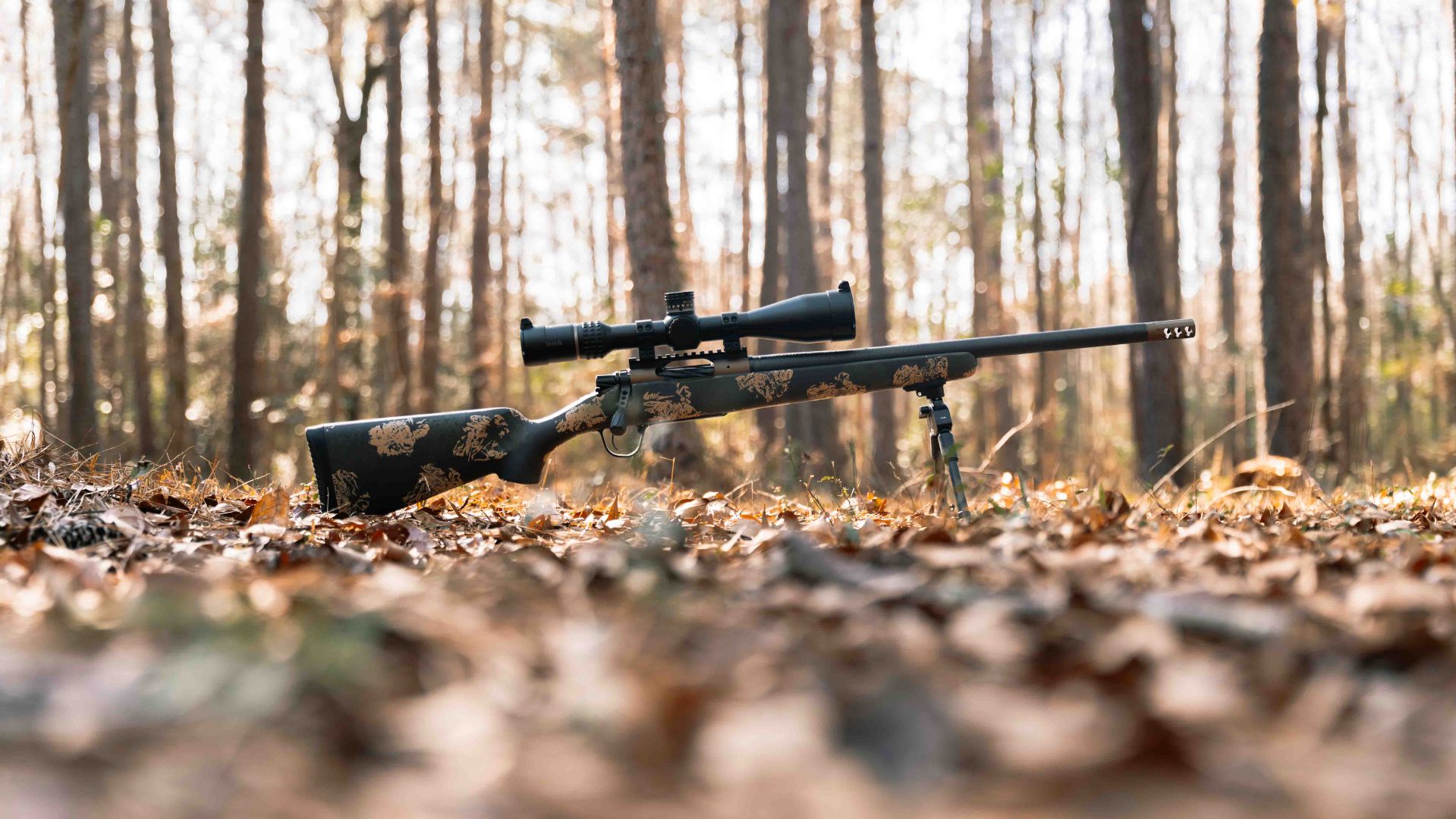
A muzzle brake is one of the most effective tools for reducing felt recoil, controlling muzzle rise, and getting back on target faster. Recoil is part of shooting, but how much of it you feel and how quickly you recover is something you can influence with the right muzzle device.
This muzzle brake guide explains how muzzle brakes work, how they compare to suppressors and compensators, and which Christensen Arms brake makes the most sense for your rifle and shooting style.
What Is a Muzzle Brake?
A muzzle brake is a device threaded onto the end of a rifle barrel that redirects propellant gases as they exit behind the bullet. By venting gas through ports cut into the brake, the device counteracts rearward recoil and upward muzzle movement.
Every bolt-action rifle Christensen Arms builds ships with a removable muzzle brake standard. It is not an afterthought or an add-on. It is a precision-machined component fitted to the barrel with the same tolerances applied to every part of the rifle.
A well-designed muzzle brake can reduce felt recoil by 40-50% depending on cartridge, brake design, and barrel length. On magnum cartridges, that difference is significant.
How Does a Muzzle Brake Work?
When a round is fired, the bullet travels down the bore and exits the muzzle, followed immediately by a high-pressure column of propellant gas. In a standard unbraked barrel, those gases exit straight forward and the reaction force pushes the rifle back into the shooter's shoulder while the barrel climbs upward.
A muzzle brake intercepts those gases through a series of ports. Depending on the design, those ports redirect gas sideways, upward, or in a combination of directions. Each redirect creates a counterforce that helps cancel recoil and muzzle rise.
The tradeoff: redirecting gas increases blast and concussion near the shooter and anyone standing beside them. Proper hearing protection is non-negotiable when shooting with a muzzle brake.
Muzzle Brake vs. Compensator vs. Suppressor
The terms muzzle brake, compensator, and flash hider are often used interchangeably, but they serve distinct purposes. Here is how they compare:
| Device | Primary Function | Recoil Reduction | Blast / Noise |
|---|---|---|---|
| Muzzle Brake | Reduce felt recoil and muzzle rise | High, often 40-50% | Increased |
| Compensator | Reduce muzzle rise only | Moderate | Moderate increase |
| Flash Hider | Reduce visible muzzle flash | Minimal | Neutral |
| Suppressor | Reduce sound signature | Moderate | Significantly reduced |
Many precision hunters and long-range shooters choose a muzzle brake for recoil reduction, then swap to a suppressor when shooting suppressed. Every Christensen Arms muzzle brake is removable. Remove the brake, thread on the suppressor, and the rifle is ready. Learn more about suppressor-ready rifles from Christensen Arms.
The Radial Muzzle Brake
The Radial Brake is Christensen Arms' standard hunting brake, a 360-degree design that reduces felt recoil by redirecting gases through small ports distributed evenly around the muzzle. This makes it a strong choice for hunters who shoot from a variety of field positions.
The 360-degree port design manages blast evenly in all directions. The main consideration for prone or bench shooters is that downward ports can disturb debris on the ground in front of the muzzle.
Stainless Steel Radial Brake ships standard on: Mesa FFT. Titanium Radial Brake ships standard on: Summit Ti.
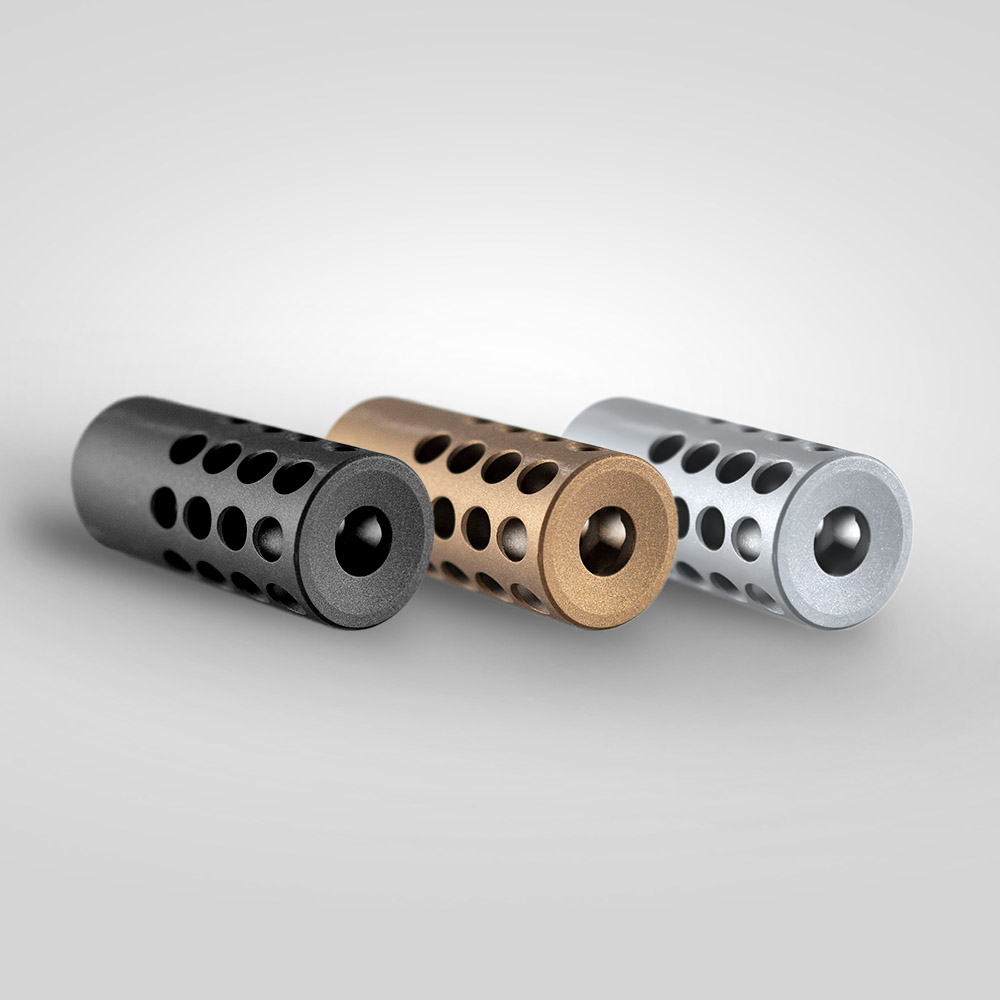
Stainless Steel Radial Brake
360-degree port design for even gas redirection and consistent recoil management across field shooting positions.
Shop Radial BrakeThe Side-Baffle Muzzle Brake
The Side-Baffle Brake is Christensen Arms' precision and tactical brake. Its four large side ports maximize felt recoil reduction, while four threaded top ports allow muzzle rise adjustment.
The tradeoff is that the angled side ports direct more concussive blast back toward the shooter than the Radial Brake's even distribution. For solo shooters this is manageable with proper hearing protection. For team shooting situations, positioning matters.
Ships standard on: Modern Precision Rifle, ELR, BA Tactical, and TFM. A compact version ships on the Mesa Long Range.
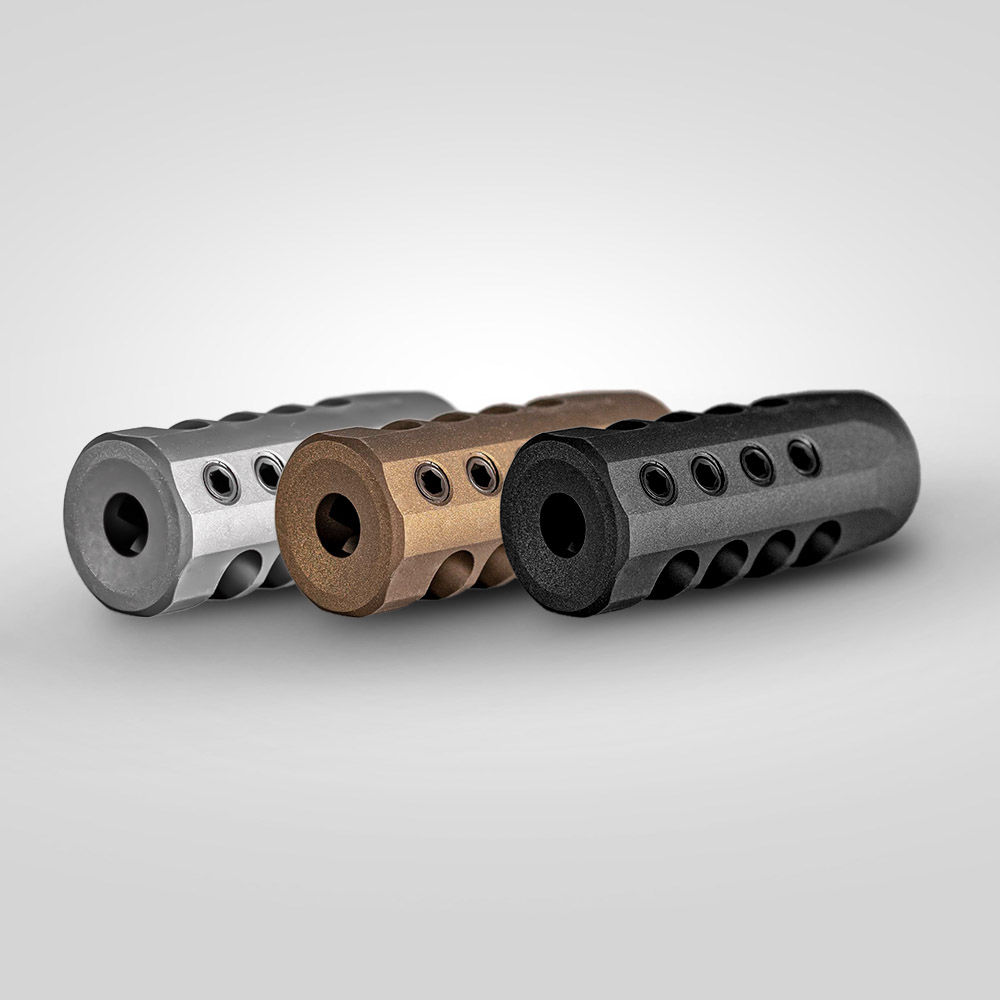
Stainless Steel Side-Baffle Brake
Four large side ports for maximum recoil reduction plus four threaded top ports for adjustable muzzle rise control. Includes crush washer.
Shop Stainless Side-Baffle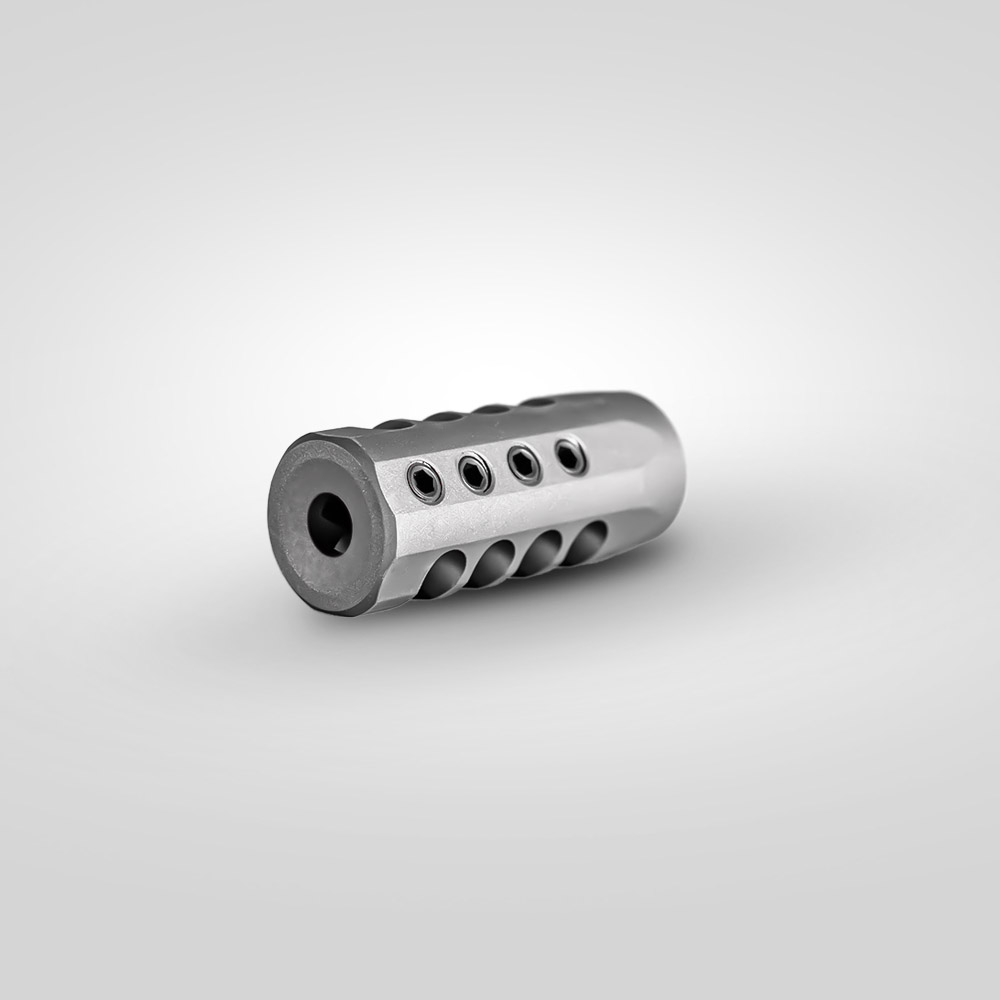
Titanium Side-Baffle Brake
The same proven Side-Baffle design in titanium, shaving meaningful weight without sacrificing performance. Includes crush washer.
Shop Titanium Side-BaffleHow to Choose the Right Muzzle Brake
The right muzzle brake depends on your rifle platform, shooting context, and priorities around weight. Here is how to think through the decision:
- Hunting in the field: The Radial Brake's even gas distribution makes it the better hunting brake.
- Long-range precision shooting: The Side-Baffle Brake's greater recoil reduction and adjustable top ports make it the clear choice.
- Prone shooting: Consider the Side-Baffle over the Radial to minimize ground disturbance from downward-facing ports.
- Suppressor-ready builds: Both brakes are fully removable when you are ready to thread on a suppressor.
- Ultralight backcountry builds: The Titanium Side-Baffle Brake saves meaningful weight over stainless options.
When in doubt, match the brake to the rifle it came on. Christensen Arms engineers each brake to complement the platform it ships with.
Muzzle Brake Safety
A muzzle brake changes the acoustic signature and blast characteristics of your rifle. A few safety considerations are non-negotiable:
- Always wear hearing protection: Blast redirection increases sound pressure at the shooter's position. Muzzle blast can exceed 160 dB, well above the CDC's recommended 85 dB threshold for hearing damage.
- Be aware of bystanders: Side-directed ports push concussive blast laterally. Communicate before the shot.
- Clean the baffles: Carbon buildup inside the brake ports affects performance over time.
- Check indexing after installation: A crush washer brake that is not properly indexed can redirect blast toward the shooter.
Also Available: The RFR Muzzle Brake
The RFR Brake ships standard on the Ridgeline FFT and is also available separately for shooters looking for a clean, compact muzzle brake design.
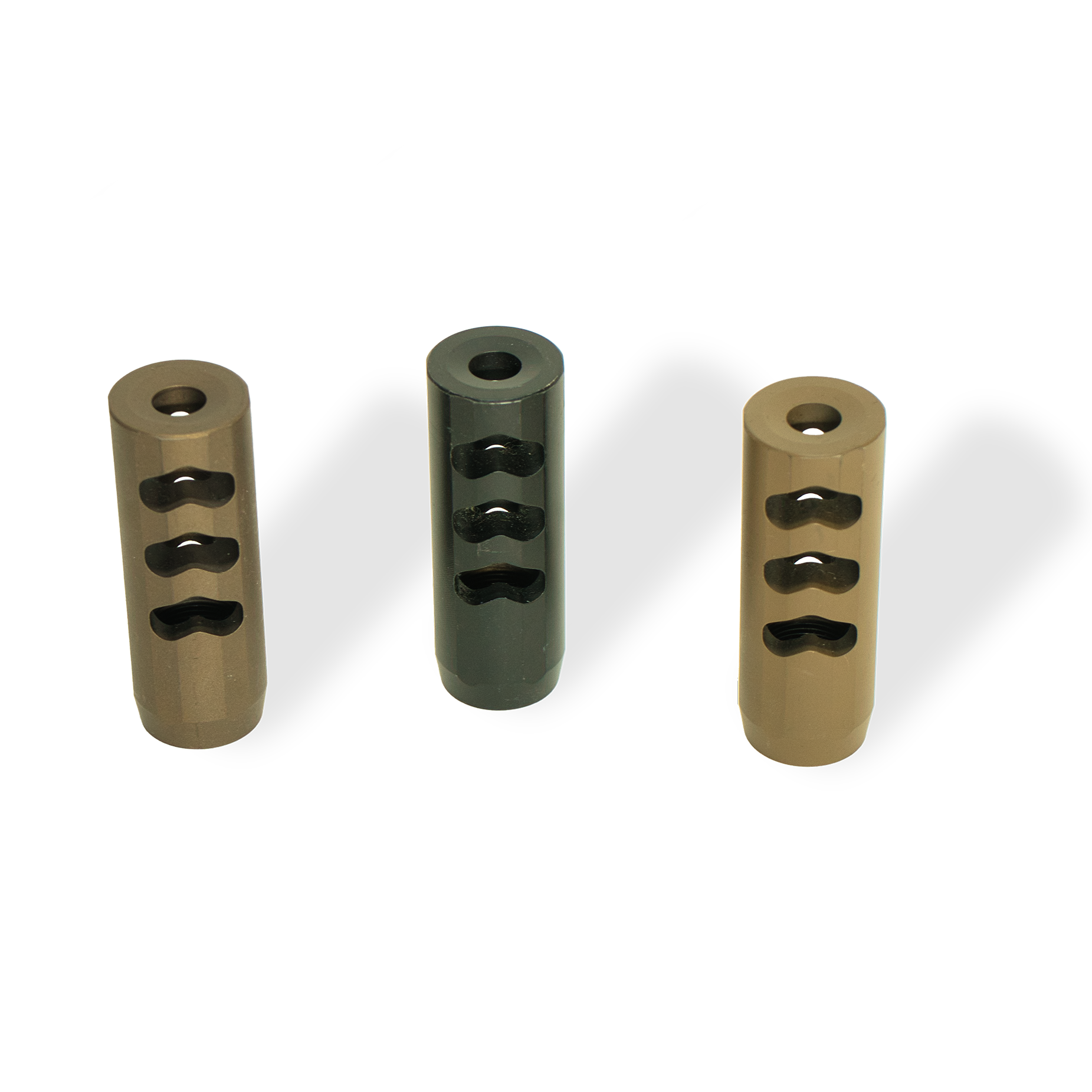
Stainless Steel RFR Brake
Precision-machined stainless steel muzzle brake with a clean, compact profile and multiple thread pitch options.
Shop RFR BrakeThe Bottom Line
The right muzzle brake is not simply the most aggressive option. It is the one that fits your rifle, your shooting style, and the conditions you operate in.
Whether you are hunting mountain elk, shooting long-range precision, or building an ultralight suppressor-ready kit, Christensen Arms has a muzzle device built for the job.
Less recoil. Faster follow-up. Better shots.
Find the Right Brake for Your Rifle
Choose the Christensen Arms muzzle device that matches your rifle, shooting style, and suppressor plans.
Less recoil. Faster follow-up. Better shots. Shop All Muzzle Devices We use cookies on our website to give you the most relevant experience by remembering your preferences and repeat visits. By clicking "Allow all", you consent to the use of ALL the cookies.